
 Whatsapp
 Buy Gift Card


 Spanish | Espana
 German | Deutch
 Chinese | 中文(简体)
 Japanese | 日本語


Table of Contents
Companies can increase their profits by as much as $12.5 for every dollar spent on Corporate travel if the trip is well-planned and performed.
Businessmen nowadays prefer self-booking and other forms of independent travel planning. To maximize the return on investment from business trips, companies strive to reduce associated costs.
Managed travel programs and innovative corporate travel management systems can help you achieve your goals. This corporate travel management guide for organizing business trips can help you accomplish these goals and more.
Understanding Corporate Travel in Brief
Corporate Travel gets to the core of a thoughtful approach to redefine the business traveler’s experience. It goes beyond mere logistics, offering a service that resonates with the professional’s need for efficiency and personalized care. For the business traveler, this means more than just a service; it signifies a thoughtful ally that understands the demands of their journey.
With this understanding, a business trip transforms into more than a routine endeavor, it becomes a purposeful, perfect exploration where every detail is considered, allowing professionals to focus on their objectives with peace of mind.
Deciphering Corporate Travel Management Mechanisms
The term “Corporate Travel Management” refers to the process through which a firm exercises control over, keeps track of, and provides an accounting of its travel-related expenditures. It is possible to delegate Corporate travel arrangements to in-house travel coordinators, external Corporate travel services, or office administrative personnel.
Even while these programs are generally referred to as corporate travel management (CTM), even small businesses can benefit from a specialized program. The US Small Business Administration (SBA) explains that small businesses operate more effectively when they use structured planning, budgeting, and cost-management tools such as business plans, startup cost calculators, and credit management resources.
Aiming for Efficiency
Some businesses value corporate travel management services because business travel is so critical to the success of their firm and its workers, especially as business travel trends continue to evolve. Despite the ubiquity of video conferences, there is still no substitute for face-to-face contact when developing and maintaining client and colleague relationships, turning prospects into customers, and networking with other professionals in the field.
Businesses may want to think about the advantages of corporate travel management programs, such as:
1- Financial Optimization Strategies
Corporate Travel Management agents, teams, and specialists should be more knowledgeable about corporate travel than the average employee. They are frequently better suited to negotiating or discovering the most outstanding prices on flights, hotels, insurance, and other travel-related expenses.
2- Time-saving Tactics
Organizing a business trip requires significant time and effort, especially if your personnel travels frequently. Corporate Travel Management teams take on the responsibility for your employees or finance department, allowing them to focus on their tasks.
3- Ensuring Policy Adherence
Corporate Travel Management personnel can assist in the enforcement of corporate travel regulations, allowing businesses to monitor and reinforce compliance concerning hotel, car, and airfare spending restrictions, vendor stipulations, and other factors.
What Are The Six Phases of Corporate Travel Management?
Initially, the scope of “Corporate travel management” has been limited to only reserving flights and lodging. However, with the rise of customization in corporate travel, workers are looking for additional amenities and assistance when away from home. As a result, the two-step corporate travel management process has evolved into a six-stage process.
Creating a company’s travel policy, reserving flights and lodging, and compiling post-trip reports on employee business travel expenses are all part of today’s sophisticated corporate travel management processes.
1- Crafting Travel Policies
Your company travel management policy serves as the cornerstone of your whole corporate travel management process. It dictates how various levels of personnel will travel, where they will stay, their per-diem allowance, etc. Therefore, your corporate travel strategy should be cost-effective without sacrificing the safety and comfort of your personnel. To prevent infractions, it should also be understandable to personnel.
A corporate travel management company can assist you in developing a travel strategy that optimizes travel expenditures, meets business travel goals, and assures employee safety and comfort.
2- Orchestrating Reservations
Corporate travel management is primarily responsible for booking flights and hotels for employees. Additionally, each employee’s booking must comply with company rules. According to the International Air Transport Association (IATA), Global Distribution Systems like Amadeus, Sabre, and Galileo are the main tools used by travel professionals and corporate travel agencies to book flights.
However, modern corporate travel management businesses also include a self-booking tool that consolidates flight and hotel bookings onto a single platform and streamlines the booking process. By logging into the platform, employees may arrange economical, policy-compliant flights and accommodations on their own.
3- Providing Passenger Support
Employees on overseas business trips may require assistance in locating the shortest route to their meeting location, utilizing public transportation, and complying with travel restrictions, or in the event of an emergency.
You can hire a travel management company to provide your employees with 24/7 help. In addition, modern corporate travel management firms offer chatbots powered by artificial intelligence to give client service outside of normal business hours.
Pro Tip:
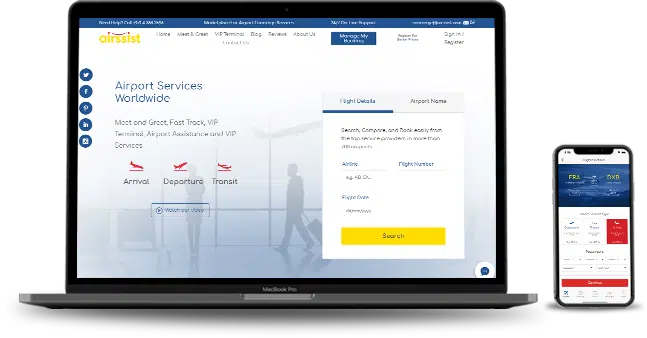
For companies looking to offer smoother airport experiences, services like airssist can help welcome travelers, speed up security, immigration, and check-in processes, and provide convenient greeter, porter, or buggy assistance to reduce stress during busy trips.
4- Consulting Services
Providing consultancy services involves providing business travelers with a variety of useful information for their journeys. The information includes destination country traditions, foreign travel etiquette, staff safety evaluations, and more.
A duty of care plan is an example of a consulting service par excellence. A travel risk assessment checklist is another instance of a consulting service.
5- Supplementary Travel Aids
Travel auxiliary services include itinerary management, travel updates, alarms for overspending, etc. These services are intended to facilitate business travel for your staff by providing additional support.
Multiple other facets of company travel management can be managed with the assistance of travel management software.
6- Analyzing Travel Data
The data on travel expenses provides insight into your employees’ spending habits, main cost areas, savings, and policy compliance.
Corporate travel management software enables real-time dashboards and scheduled reporting for deeper insights.
Overcoming Travel Management Challenges
Interminable email chains, overworked administrative staff, lack of communication with finance, unread travel policies, reduced passenger flexibility, and consumer-style booking habits all contribute to corporate travel difficulties.
Strategizing Travel Plans
Pick a clever booking tool, ensure round-the-clock assistance, use real-time travel expenditure data, and increase coordination between administration and finance.
1- Leveraging Booking Technologies
Since the advent of internet booking services, companies from all over the world have started using consumer websites to book business trips. As there is no one keeping an eye on things, the CFO has to play the bad cop to avoid hidden costs.
2- Supporting Travelers Round the Clock
You’d have to be a vampire that never needs sleep to provide travel support around the clock 24/7, so your best bet is to find a reliable partner who can do it for you.
3- Managing Expense Data
Successful corporate travel management requires cooperation between finance and operations. You need data that is accurate and provides valuable insights into travel expenses.
4- Facilitating Admin-Finance Alignment
Streamlined approvals, easy access to invoices, instant spend tracking, and reducing inflated legacy booking costs all support better travel management.
FAQs: The Ultimate Corporate Travel Management Services Guide
What is corporate travel management?
Corporate travel management is basically how a company organizes all its business trips. It covers things like travel policies, booking systems, budgets, and keeping travelers safe and comfortable. Think of it as the behind-the-scenes system that keeps every work trip running smoothly. It helps companies save money and employees avoid travel stress.
What is a corporate travel manager?
A corporate travel manager is the person who makes sure every business trip goes as planned. They handle bookings, budgets, travel rules, and vendor relationships. They’re the go-to support for employees who are traveling. In short, they make sure the company’s travel program works without chaos.
What does a corporate travel manager do?
A travel manager coordinates everything from choosing hotels and flights to helping employees when plans change. They negotiate better rates, manage policies, and track travel spending. If someone needs help on the road, they’re usually the first point of contact. Their job is to make business travel efficient and stress-free.
How to manage corporate travel?
Managing corporate travel starts with a clear policy and a good booking system. Companies often centralize everything so bookings, approvals, and expenses stay organized. It also means helping travelers when they need support and keeping an eye on costs. Many businesses now use corporate travel management services to make this easier.
How to manage travel expenses in corporate?
The easiest way to manage expenses is by using one tool for all receipts, reports, and approvals. Setting spending limits and approved vendors helps control costs. When companies regularly review travel data, they spot savings opportunities faster. It keeps everything transparent and easy for both employees and finance teams.
Why is corporate travel management important?
It matters because it saves money, reduces stress, and keeps everyone safe. Without a system, travel becomes messy and expensive very quickly. Good travel management means better rates, smoother trips, and fewer last-minute problems. It helps the whole company operate more efficiently.
How can one become a corporate travel manager?
Most people start in admin, hospitality, customer service, or travel-related roles. You build experience with booking tools, travel policies, and expense systems over time. Strong organization and communication skills are a big plus. Some people also boost their careers with travel management certifications.
Is corporate travel management consulting?
It can be. Many travel managers and agencies give advice on policies, budgeting, safety, and process improvements. It’s not purely a consulting job, but it definitely includes consulting-style guidance. Businesses rely on this expertise to improve their travel strategy.
A Smooth Finish to Your Corporate Travel Strategy
Corporate travel management plays a vital role in helping companies create smoother, safer, and more cost-efficient business travel experiences.
By combining clear travel policies, streamlined booking systems, continuous traveler support, accurate expense reporting, and strong coordination between departments, businesses can transform travel from a logistical burden into a strategic advantage.
Make your next business journey smoother with travel concierge services designed to elevate every step of your travel.
Sources
- U.S. Small Business Administration (SBA). Plan Your Business. https://www.sba.gov/business-guide/plan-your-business
- International Air Transport Association (IATA). Global Distribution Systems: Fares & Ticketing. https://www.iata.org/en/training/pages/global-distribution-systems-fares-ticketing/
- Forbes Business Council. Optimizing Corporate Travel Management in 2025. https://www.forbes.com/councils/forbesbusinesscouncil/2025/10/17/optimizing-corporate-travel-management-in-2025/
Note: Please note that the information on this page is generic & subject to change due to fluctuations in airport services. Kindly confirm service availability with our team, as offerings may vary daily.






 Dubai, United Arab Emirates


