
 Whatsapp
 Buy Gift Card


 Spanish | Espana
 German | Deutch
 Chinese | 中文(简体)
 Japanese | 日本語


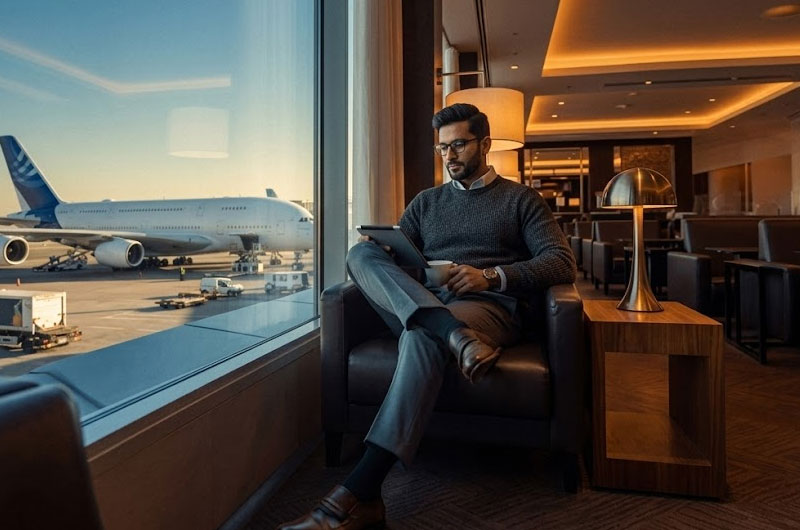
Table of Contents
Frequent flyers know the feeling. You land after an eight-hour red-eye, you have a board meeting in three hours, and the only place to sit is a plastic chair next to a crowded gate. Business travel has always been demanding, but the physical and mental toll of it is now impossible to ignore.
Executives and road warriors are not just dealing with jet lag anymore. They are managing disrupted sleep, poor airport food, back-to-back time zones, and the constant noise in terminals. The airport private lounge for wellness is now a reality. It is expanding, and business travelers are driving the demand.
What You Will Learn in This Article
- What an airport private lounge is and how it is different from traditional airport lounges
- Why luxury airport lounge is becoming a major trend in business travel
- Key features of healthy airport lounges, including sleep pods, recovery zones, and wellness dining
- How business lounge wellness is reshaping corporate travel expectations
- Real examples of airports offering advanced wellness-focused lounge experiences
- Practical tips to get the most out of your time in an airport private lounge
Why Airport Wellness Lounges Are Replacing Traditional Lounges?
An airport wellness lounge is a dedicated space inside an airport terminal that goes beyond the traditional idea of comfort. According to the Global Wellness Institute, the wellness economy reached $6.8 trillion globally in 2024, and travel wellness is one of its fastest-growing segments. An airport wellness lounge is a space inside the terminal designed to help travelers rest and recover, not just wait for a flight.
A traditional lounge mainly offers comfort-based airport lounges’ benefits such as seating, food, drinks, and a quieter environment away from the busy terminal.
A wellness lounge builds on these benefits by focusing on physical and mental recovery. These lounges often include:
- Sleep pods
- Meditation rooms
- Stretching areas
- Spa services
- Light fitness zones
- Healthier food options
Research from Airports Council International (ACI World) supports this shift. Its Global Traveller Survey highlights that passengers increasingly expect airport experiences that reduce stress and improve overall well-being. The findings show that wellness-focused environments such as relaxation areas, yoga spaces, and premium lounge services are closely linked with higher passenger satisfaction.
What changes is the experience itself. Traditional lounges are designed to make waiting easier. Wellness lounges are designed to help you feel physically and mentally better when you leave.
Traditional Lounge vs Wellness Lounge (A Quick Comparison)
| Feature | Traditional Lounge | Wellness Lounge |
| Focus | Comfort and waiting | Recovery and well-being |
| Food | Buffet and drinks | Fresh, healthier options |
| Rest | Chairs and sofas | Sleep pods and rest zones |
| Mental health | Minimal | Meditation and quiet areas |
| Physical activity | Not available | Stretching and light exercise |
| Technology | Wi-Fi, screens | Light-based recovery tools |
| Access | Ticket or membership | Often pay-per-use |
What Does an Airport Wellness Lounge Offer That Regular Lounges Don’t?
While traditional VIP airport lounges focus on comfort with standard armchairs, buffets, and open bars, airport wellness lounges completely shift the experience toward physical and mental rejuvenation. Instead of simply helping travelers pass time, these spaces turn transit into an opportunity to recharge and recover.
The biggest difference between wellness spaces and standard VIP airport lounges comes down to how they support your body and mind before a long flight.
1. Functional Fitness and Movement
Regular lounges encourage you to sit still, which can worsen poor circulation and muscle stiffness before you even board. Wellness lounges introduce dedicated spaces to get your body moving.
- Yoga and Meditation Studios: You will find quiet, dimly lit rooms equipped with mats, blocks, and sometimes guided digital meditation screens or ambient soundscapes to help calm the nervous system.
- Stretch and Exercise Zones: Instead of traditional business centers, these lounges feature compact workout areas. Some provide Peloton bikes, stretching bars, or light free weights so you can boost circulation before being confined to an airplane seat.
2. Advanced Recovery Technology
While a traditional lounge might offer a standard shower suite, a wellness lounge integrates technology designed to combat jet lag, inflammation, and travel fatigue.
- Light Therapy Systems: Many spaces utilize circadian lighting or specialized light therapy chairs to help reset your internal clock, depending on whether you need to wake up or wind down.
- Cryotherapy and Compression: Premium wellness hubs are beginning to introduce compression boots (like Therabody systems) to reduce lower-body swelling, alongside localized cryotherapy or advanced massage chairs that target travel-induced tension.
- Nap Pods and Sound Masking: Instead of standard quiet rooms with recliners, you will find fully enclosed sleep pods featuring acoustic soundproofing, guided breathing rhythms, and ergonomic zero-gravity positioning.
3. Circadian and Functional Dining
Standard lounge buffets often lean heavily on comfort foods, rich pastries, pasta, and sugary mixers. Wellness lounges design their menus to mitigate the physiological stress of flying.
- Hydration Stations: You will see dedicated bars serving functional beverages, such as electrolyte-infused waters, cold-pressed green juices, kombucha, and adaptogenic teas that support immunity and gut health.
- Anti-Bloat, Nutrient-Dense Menus: The food focuses on lean proteins, healthy fats, and high-fiber ingredients that are easy on the digestive system at high altitudes, avoiding heavy sodium and refined sugars that contribute to in-flight bloating.
The physical risks of frequent long-haul travel are also real and documented. The World Health Organization (WHO) has identified Deep Vein Thrombosis (DVT), severe travel-related anxiety, and infection exposure as legitimate health risks tied to repeated air travel. Wellness lounges address these risks directly through movement spaces, touchless design, and stress-reduction amenities.
Which Airports Have Turned VIP Airport Private Lounges Into Wellness Hubs?
Changing traveler expectations are reshaping what premium airport access means. The perception of luxury is moving away from open bars and leather seats toward measurable health outcomes and genuine recovery support. Accessing an airport private lounge without a credit card or business class ticket is also increasingly possible through third-party platforms, which is widening the wellness lounge audience beyond just elite flyers.
Several major international hubs and airlines have embraced this shift, moving past basic waiting areas to build dedicated, high-tech recovery spaces.
1. Doha Hamad International (DOH): Vitality Wellbeing and Fitness Centre
Instead of a traditional lounge setup, this is a standalone wellness hub located above the Oryx Airport Hotel at Doha Hamad International Airport (DOH).
- What it offers: A 25-meter indoor swimming pool, a fully equipped gym, hydrotherapy tubs, and squash courts. It allows transit passengers to get a genuine cardio workout and full-body reset between long-haul flights inside a VIP terminal environment.
2. New York John F. Kennedy International (JFK): Centurion Lounge
At New York John F. Kennedy International Airport (JFK), this lounge includes a dedicated recovery-focused space within Terminal 4.
- What it offers: A dedicated Equinox Body Lab. Travelers can book sessions in acoustic vibrational therapy chairs designed to cure jet lag, utilize compression boots to restore lower-body circulation, and access guided stretching sessions.
3. Singapore Changi Airport (SIN): Jewel and Terminal Lounges
Changi Airport features multiple wellness installations across its independent and airline spaces, including the Ambassador Transit Lounges and the Changi Lounge at Jewel.
- What it offers: Rentable nap pods with proper sound masking, private shower suites, and immediate access to transit spas offering rapid hydration facials and deep-tissue shoulder massages tailored for frequent fliers.
4. San Francisco International (SFO): Yoga Rooms (Terminals 2 and 3)
While not restricted to a single premium airline ticket, SFO helped lead the airport movement trend by launching dedicated passenger wellness spaces.
- What it offers: Quiet, dimly lit rooms with asymmetric wood paneling, floor-to-ceiling mirrors for alignment, and complimentary high-quality yoga mats. The spaces are completely silent, free of airport announcements, and designed solely for pre-flight decompression.
5. Frankfurt Airport (FRA): Yoga Rooms (Terminals 1 and 2)
Frankfurt designed two fully equipped, tranquil oasis spaces to combat transit stress.
- What it offers: Warm-toned ambient lighting, full-length mirrors, yoga blocks, and digital monitors displaying guided video flows and breathing exercises to help passengers release upper-body tension before boarding.
4 Practical Ways to Optimize Your Pre-Flight Recovery
Getting real value from a wellness-focused airport lounge takes a little planning. Arriving just before boarding usually isn’t enough time for your body to properly slow down and reset. A few simple choices can make your time in a luxury airport lounge feel genuinely restorative.
1. Start With The Recovery Spaces First
The most popular options like sleep pods, compression boots, and quiet rooms get taken quickly. If you want them, it makes sense to secure a slot as soon as you arrive, before settling in anywhere else.
2. Pack Something Comfortable To Change Into
Stretching or relaxing properly is hard if you’re still in tight work clothes or formal shoes. Having something simple like joggers, a T-shirt, or clean socks in your carry-on makes it much easier to actually unwind.
3. Be Mindful Of What You Drink Before Boarding
What you choose at the lounge bar can affect how you feel on arrival. If sleep is the goal, lighter options like herbal drinks work better than caffeine. If you need to stay alert for meetings, something more energizing like ginger or matcha can help.
4. Sort Your Access Before You Get To The Airport
Trying to figure out entry at the last minute adds unnecessary stress. Pre-booking access through a reliable service helps you walk in without delays, so you can go straight to resting instead of dealing with queues or paperwork.
Airports Just Changed the Rules of Travel Comfort
Business travel is becoming more demanding, with tighter schedules, long-haul flights, and higher expectations on arrival. The rise of airport wellness lounges reflects a practical need for rest and recovery, not just a luxury trend.
Travelers are asking better questions: not just “where can I sit?” but “how can I arrive at my best?” Airports are building the answer into their infrastructure. Companies are building it into their travel policies.
For business travelers and those responsible for corporate travel management, airport time is no longer wasted time. It can now support rest and recovery before important meetings.
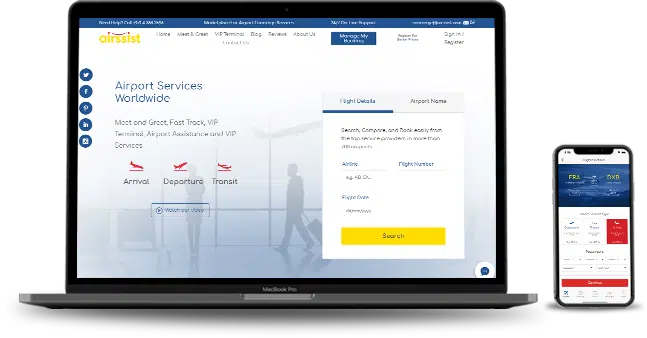
Access to wellness-focused airport private lounges is also becoming more flexible, with established global booking platform like airssist making it easier to enter premium spaces without airline status or credit card tiers.
Frequently Asked Questions
Are airport wellness lounges included in business class tickets or do you need separate access?
Most airport wellness lounges are not included with business class tickets. They usually require separate access through a booking, day pass, or lounge program. Some locations may include access through airline partnerships, but this is not standard.
Can economy passengers use airport wellness lounges?
Yes. Many airport wellness lounges are open to all travelers regardless of ticket class. Economy passengers can usually enter through pay-per-use entry, online booking, or third-party access platforms that provide lounge entry.
How long should you spend in an airport wellness lounge before a long flight?
The most effective visit is around one to three hours. This gives enough time to rest, stretch, eat lightly, or use relaxation spaces. Even a short stay can help reduce fatigue before a long-haul flight.
Are airport wellness lounges available at all international airports?
No, they are not available everywhere yet. They are mainly found in major international hubs such as Singapore Changi, Dubai International, Amsterdam Schiphol, and London Heathrow. Availability varies by airport, so it is best to check in advance before traveling.
Note: Please note that the information on this page is generic & subject to change due to fluctuations in airport services. Kindly confirm service availability with our team, as offerings may vary daily.




 1701 1 Lake Plaza, Jumeirah Lakes Towers Dubai UAE


