
 Whatsapp
 Buy Gift Card


 Spanish | Espana
 German | Deutch
 Chinese | 中文(简体)
 Japanese | 日本語



Table of Contents
Three cities. Four days. Five conferences at various time zones. If you regularly manage multi-leg business trips, you already know that one missed transfer or a misplaced confirmation email can derail an entire week of work.
What distinguishes between travelers who come sharp and travelers who come exhausted has little to do with luck. It boils down to how the trip was constructed in the first place: which connection times were selected, which ground services were booked, and whether the itinerary is a connected system or a sequence of isolated bookings.
This guide explains how to approach multi-leg business trip with more precision. It focuses on the practical steps that reduce delays, simplify movement between airports and cities, and help business travelers stay organized, productive, and ready to perform throughout the journey.
Quick Insights
- Learn how to manage multi-leg business trips without delays or confusion
- Understand how to plan routes, connections, and schedules efficiently
- Discover ways to reduce travel stress and save time at each stop
- Find out how to stay organized across multiple destinations
- See how to improve productivity during complex business travel
- Get practical tips to make every leg of your trip smoother
What Is a Multi-Leg Business Trip, and Why Does It Demand Different Planning?
A multi-leg business trip means traveling to two or more destinations one after another before returning home. You can fly to Frankfurt, Riyadh, Singapore, and Sydney. All of them are legs. They each have their own check-in window, their own immigration, their own transfer logistics, and their own possible delay that cascades forward to each successive leg.
The GBTA Foundation found that 74% of travel managers now encourage or require combining multiple trips into one itinerary, which explains why multi-leg journeys are becoming far more common across corporate travel programs. This shift improves efficiency and reduces costs, but it also introduces a level of complexity that many travelers underestimate.
Multi-leg trips are very different from simple return trips. A delay on one flight in a normal trip is frustrating, but you can usually handle it. But on a multi-leg journey, that same delay can leave you tired and affect how you perform when you arrive.
For any business traveler aiming to optimize their business travel at the program level, recognizing that “multi-leg complexity requires a different planning framework” is the first step towards success.
8 Ways to Manage Multi-Leg Business Trips (Without the Chaos)
The following steps address the most common failure points in multi-leg itineraries. Each covers a distinct aspect of the journey, and together they form a repeatable planning process.
1. Book the Full Itinerary Through One Platform, Not Separately
Booking each flight leg independently through different carriers creates a dangerous gap in protection. If your first flight is delayed and causes you to miss the connecting flight you booked separately, the second airline has no obligation to rebook you at no charge. Your legs are only protected when they sit on a single itinerary, with one carrier or alliance taking responsibility for the chain.
According to the International Air Transport Association, all booking systems rely on officially defined Minimum Connection Times (MCT), which represent the shortest time required to transfer passengers and baggage between flights at a specific airport . Booking outside these thresholds significantly increases the risk of missed connections, especially in multi-leg itineraries where delays can cascade across multiple flights.
Use a consolidated corporate booking tool that covers flights, accommodation, and transfers in a single view. This is not just about administrative tidiness. When a leg needs to be rebooked urgently, having a single itinerary number and a single contact point is the difference between a 10-minute fix and a two-hour airport queue. Travel managers who carefully organize a corporate trip this way consistently report faster recovery from disruptions.
- Minimum connection times: 90 minutes for domestic hops, two hours or more for international legs.
- Single point of contact: Ensure one team member or agency can action changes across all legs without needing separate calls to separate carriers.
2. Select Connecting Airports Based on Transit Capability, Not Just Price
A multi-leg flight variable that most travelers fail to factor in when comparing fares is the hub airport where you change flights. The additional 40 euros on a ticket that goes through Singapore Changi or Dubai International is well worth it, given that both airports are designed for speedy, low-friction movement. Lower-cost routes often pass through inefficient hubs with complex transfers, long walks, or re-screenings.
Research the transit process at any hub you have not used before. Make sure that your connecting gates are at the same terminal, that you go through immigration, and that your layover is during the airport’s quiet hours, when staffing levels decrease. A quick check of terminal layout and transfer rules prevents unrealistic layovers.
- Prefer airports with single-terminal or airside layouts during short layovers.
- Check the published minimum connecting time in the airport, which is the official minimum below which connections will be considered too tight.
- When you fly through the same hub multiple times, check whether the airport has a registered traveler or fast transit program which provides a predictable process every time.
3. Arrange Ground Transfers Before Departure, Not on Arrival
The period between landing and reaching your next obligation is where multi-leg trips lose time most consistently. Arriving at an unfamiliar airport, negotiating transport, and navigating to a hotel or meeting venue without a pre-arranged plan is inefficient by design.
Pre-booked chauffeured airport transfers eliminate this entirely. A reputable provider tracks your incoming flight, adjusts for arrival time changes automatically, and has a driver at the arrivals zone when you walk out. This removes the need for on-arrival coordination entirely.
- Book transfers for every leg of the trip at the planning stage, not as an afterthought once you are already in transit.
- Confirm that the transfer provider pulls live flight data so that delays trigger automatic adjustments to the pickup time.
- For VIP travelers or executives with back-to-back engagements, consistency in the vehicle and driver across a multi-day stint in one city saves the time spent re-briefing logistics each morning.
4. Use Meet and Greet Services to Cut Airport Navigation Time at Every Stop
What proportion of your time at each airport on a multi-leg trip do you spend doing something that contributes to your work? Going through the gate to immigration, standing in queues, reclaiming baggage, and the transfer pick-up area are all activities that do not yield any fruit.
Meet and greet services provide a special airport attendant to meet you at the gate or at arrivals and assist in all the formalities, and transfer you directly to your vehicle. You need not have knowledge of the airport layout. All that is done by the assistant, and you move through every airport at a speed that is literally quicker than walking alone.
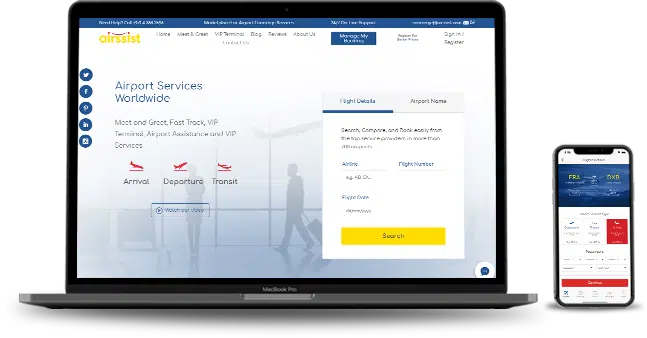
This is where services like airssist add real value for frequent multi-leg travelers. It serves some of the greatest international hubs, and with the same support available at all your stops, you can be assured that the experience will be the same no matter which city you are in.
- Book meet and greet at departure, transit, and arrival points on complex itineraries.
- Particularly useful at airports with lengthy immigration procedures or where language presents a practical barrier.
- Ask your travel manager whether meet and greet can be added as a standard line item for senior travelers on itineraries of three legs or more.
5. Schedule Recovery Windows Into the Itinerary as Fixed Blocks
Recovery time between legs is not a sign of a light schedule. It is a performance input. A traveler who lands at midnight and has a critical presentation at 8 am the next morning is working against their own outcome. Cognitive performance drops measurably after disrupted sleep, and the effects compound across multiple consecutive nights of poor rest.
When drafting the itinerary, block recovery time the same way you block meetings. If a flight arrives after 10 pm, do not schedule anything before 9 am the next day. If a leg involves crossing four or more time zones, add an extra night at that destination before the first engagement. Recovery time directly impacts decision-making quality.
Understanding what business travelers want from airport services consistently points to reduced physical effort and faster transitions as the top priorities, precisely because experienced travelers understand that the energy they save at the airport is energy available for the work itself.
6. Treat Airport Lounges as Functional Workspaces, Not as Amenities
The ability to have a stable internet, power in the seat, and a less noisy environment to make phone calls makes it a much more feasible workspace than a departure gate. The real advantage of lounges is controlled, uninterrupted work time between flights.
Select the lounge that is nearest to your departure gate instead of one with the best facilities in another terminal. The time you spend walking between a remote lounge and your gate during boarding is lost productive time you planned to use. Lounge-to-gate distances are displayed in the terminal maps of most airports, and before you land, it will take less than two minutes to check.
- Go to the lounge with a particular task in mind: go through materials, make one call, or send a series of emails.
- Give yourself a hard exit time so that you can have a leisurely stroll to the gate before the boarding process.
- Access to the lounge can be arranged in advance through a professional service like airssist.
7. Build a Digital Document Pack Organized by Destination
Multi-leg trips frequently cross multiple countries, each with its own entry requirements. Visa documentation, hotel confirmations, health declarations, meeting invitations, and insurance certificates all need to be accessible quickly and in the right order. A single unsorted folder of PDFs does not work when you are standing at an immigration counter at 6 am after a connecting flight.
Create a cloud folder with one subfolder per destination, named and ordered by travel date. Inside each, include every document relevant to that stop: the visa or entry authorization, the hotel booking, the transfer confirmation, and the first meeting address. Download everything to your phone as offline PDFs before you leave. Cloud access fails at border crossings and in remote arrivals halls more often than you would expect.
- Entry requirements: Verify visa and health documentation rules for each country within 72 hours of departure, as policies change without significant notice.
- Emergency contacts: Include the local embassy number and your company’s duty-of-care contact in each destination folder.
- Shared access: Give your EA or travel coordinator read access to the same folder so they can act on your behalf if a document issue arises while you are mid-transit.
8. Review Every Trip Afterward and Record What Needs to Change
Treat each trip as data for improving the next one.
Which connection was tighter than it looked on paper? Which hotel location added unnecessary travel time to the first morning meeting? Which airport took more time at security than you planned for?
Recording a short voice memo at the end of the last leg helps capture insights before they are forgotten. A quarter of frequent travelers formalizing this habit report a reduction in disruption in two to three trips. The same benefit of scale applies to companies that incorporate post-trip debriefs into their travel policy.
It is precisely this type of organized feedback that organizations interested in sustainable business travel, in the long run, depend on in order to avoid repeated instances of the same inefficiency among dozens of travelers and hundreds of trips annually.
Industry analysis confirms that structured reporting is the only way to move from “scattered data” to “strategic budgeting.”
Stop Surviving Multi-Leg Trips and Start Running Them Like a System
One of the less-appreciated professional skills in business life is the ability to manage multi-leg business trips. It is neither a character trait nor a tolerance for discomfort. It is a process that can be learned, perfected, and ultimately be transferred to anyone in the organization who travels regularly as a template.
It is the travel managers and planners who make decisions at the planning level that ultimately save time and energy on the journey, allowing travelers to arrive ready to perform. Multi-leg travel becomes efficient when it is managed as a system, not a sequence of bookings.
If your current approach to these trips involves booking flights first and figuring out the rest later, it might be time to change that approach. How you handled the journey itself is very important in determining how well you perform when you arrive.
To get an idea of where to plan such trips, explore the top business travel destinations.
Frequently Asked Questions
How do you prioritize meetings across multiple destinations on a tight schedule?
Prioritization should be based on impact, not convenience. Identify which meetings directly influence outcomes and schedule those during your peak energy windows. Lower-priority discussions can be moved to virtual formats or lighter time slots. This approach ensures that critical decisions are made when you are most focused.
What is the best way to handle baggage across multiple international stops?
Traveling light is the most effective strategy for multi-leg trips. Using carry-on luggage where possible reduces delays at baggage claim and lowers the risk of lost luggage. For longer trips, consider hotel laundry services or shipping essential items ahead. Keeping essentials in your carry-on ensures continuity even if checked baggage is delayed.
How can you stay productive during long transit periods between flights?
Productivity during transit depends on planning tasks in advance. Assign specific work that can be done offline, such as reviewing documents or preparing notes. Avoid relying entirely on internet access, which can be inconsistent. Breaking work into small, defined tasks makes it easier to stay productive even in short windows. Services like airssist can also help streamline airport movement, reducing time spent on navigation and allowing you to focus more on productive work.
How do you reduce decision fatigue during multi-leg business trips?
Decision fatigue can be minimized by standardizing small choices ahead of time. Pre-select meals, transport preferences, and daily routines before the trip begins. Limiting unnecessary decisions during travel preserves mental energy for important work. A structured routine helps maintain consistency across multiple destinations.
What role does personal health play in managing multi-leg business travel effectively?
Maintaining physical health is critical for sustaining performance across multiple stops. Staying hydrated, managing sleep, and incorporating light movement during long travel days can prevent fatigue from building up. Even small habits like stretching or short walks can improve energy levels. A well-managed routine supports both focus and resilience throughout the trip.
How can you prepare for cultural and business etiquette differences across destinations?
Understanding local business etiquette helps avoid miscommunication and builds stronger professional relationships. Research basic norms such as greeting styles, meeting expectations, and communication tone before arrival. Being aware of cultural nuances allows you to adapt quickly and present yourself more effectively.
Sources
The State of Climate Action in Business Travel: 2023 Global Industry Barometer
How to Book a Limousine Bus from Narita Airport: Step by Step Guide
https://docs.google.com/document/u/3/d/1o4AuNCsBfFyp5styp2xiYmtZ-_vUeSH_qxXDVXWJmxU/edit
Business Travel Reporting: A Complete Guide for Companies
https://meshpayments.com/blog/business-travel-reporting/
Note: Please note that the information on this page is generic & subject to change due to fluctuations in airport services. Kindly confirm service availability with our team, as offerings may vary daily.




 1701 1 Lake Plaza, Jumeirah Lakes Towers Dubai UAE


