
 Whatsapp
 Buy Gift Card


 Spanish | Espana
 German | Deutch
 Chinese | 中文(简体)
 Japanese | 日本語



Table of Contents
A business trip is not a leisure holiday where a delayed flight just means an extra hour at the airport bar. In corporate travel, every minute on the schedule is tied to a meeting, a transfer, a check-in, or a deal. One wrong timing call and the entire day falls apart.
Corporate travel itinerary planning is the process of organizing all travel elements, including flights, ground transfers, hotel stays, and meetings, into a single, accurate, time-verified schedule.
In 2026, business travel schedules have become more complex than ever. Teams are traveling across multiple time zones, managing tighter meeting windows, and dealing with a global airline environment that the International Air Transport Association has described as volatile.
Travel managers, executive assistants, and anyone coordinating travel schedules need a practical itinerary strategy that keeps everything on track.
What to Expect in This Guide
- What a complete corporate travel itinerary includes
- Why precision in planning directly affects business outcomes
- The key components of a well-structured itinerary
- Common planning mistakes and how to avoid them
- How digital tools improve accuracy
- Best practices used by experienced travel managers
What Does a Corporate Travel Itinerary Actually Include?
A well-built corporate travel itinerary is more than a list of flight times copied and pasted into an email. It is a coordinated document that accounts for every segment of the journey from departure to return.
Here is what a complete itinerary should cover:
- Flight schedules with terminal details: Departure and arrival times, terminal numbers, gate information where available, and airline contact details
- Airport transfers and ground transport: Pick-up times, vehicle type, driver contact, and estimated travel time to the destination
- Hotel check-in and check-out timings: Including early check-in arrangements, room preferences, and the hotel’s front desk contact
- Meeting schedules with exact locations: Room numbers, building names, host contacts, and directions from the hotel or airport
- Built-in buffer time between each activity: Realistic gaps that account for traffic, security queues, and unexpected delays
Notice that last point. Buffer time is not padding for comfort. It is a functional part of the itinerary. Skipping it is one of the most common and costly mistakes in corporate travel management.
Why Precision Matters in Corporate Travel Itinerary Planning?
So why does precision matter so much? Because business travel schedules are interconnected. A delay in one segment does not stay in that segment. It moves through the entire day like a domino effect.
1. It Keeps Tightly Connected Schedules Aligned
When a flight lands 25 minutes late, and the driver has left, and the first meeting starts in 40 minutes across a congested city, there is no good outcome. Every segment of a corporate travel itinerary depends on the segment before it. Precise timing keeps all of them working together.
2. It Prevents Missed Meetings and Business Opportunities
In-person business travel remains essential for building trust and closing deals. According to official Bureau of Transportation Statistics (BTS) data, U.S. airlines handled 841 million enplaned passengers in the 12 months ending February 2026, with departures rising 1.6% to more than 8.75 million flights. Combined with an average load factor of 81.7%, this increased air traffic adds pressure to already tight corporate schedules. A well-planned itinerary with buffer time and reliable ground transportation helps reduce delays, minimize stress, and keep business trips running smoothly.
3. It Ensures Realistic Travel Time Allocation
There is a gap between a flight’s scheduled arrival time and the moment a traveler is actually in a car heading to their next stop. Deplaning, immigration, baggage claim, and reaching the pickup point all take time, and these steps can easily disrupt a tightly planned schedule. Executive itinerary planning accounts for this gap by building in realistic time for every stage of airport movement. In practice, an executive airport concierge helps bridge this gap by managing airport processes efficiently, ensuring ground transfers align exactly with the planned itinerary.
4. It Supports Real-Time Adjustments During Disruptions
One poorly timed segment can cascade through an entire day’s schedule. If the airport transfer is tight, the hotel check-in gets rushed. If the hotel check-in is rushed, there is no time to prepare for the first meeting. Precision planning breaks this chain before it starts and makes it easier to adjust schedules quickly when delays happen.
5. It Improves Coordination Between Multiple Stakeholders
A business trip rarely involves just the traveler. Drivers, hotel staff, executive assistants, and meeting hosts all need to operate from the same timeline. When the itinerary is accurate, everyone is working from the same page. When it is not, the coordination breaks down fast.
Key Components of a Well-Planned Corporate Itinerary
What separates a functional itinerary from a great one? These five elements:
- Chronological structure: Every event is listed in time order, with no gaps or overlaps
- Verified travel durations: Not estimated, but confirmed using real-time data for the specific route, time of day, and travel mode
- Defined buffer times: A minimum standard buffer built into every segment, not left to chance
- Contact details for all service providers: Hotels, drivers, airlines, and meeting hosts, all accessible in one place
- Backup options for key segments: An alternative driver or a later connecting flight in case the primary plan fails
It is what separates companies that handle disruptions smoothly from those that scramble every time something goes wrong
The Pitfalls of the Plan: Common Mistakes in Corporate Itinerary Planning
Even seasoned travel managers can fall into these traps. Recognizing these hurdles is the first step toward a seamless travel experience.
- Cutting it Too Close After Touchdown: Scheduling a meeting within an hour of landing is definitely stressful. A 10:00 AM arrival rarely means you are ready for an 11:00 AM presentation. Once you factor in deplaning, baggage claim, and finding ground transport, that hour evaporates. Always account for the invisible minutes between the runway and the boardroom.
- Underestimating Local Traffic and Congestion: A 20-minute drive at noon can easily become a 60-minute crawl during the morning rush. Building a corporate travel itinerary based on ideal conditions rather than real-world data leads to late arrivals. Precision planning requires checking specific time-of-day traffic and airport bottleneck trends.
- The Myth of Back-to-Back Scheduling: A calendar with no gaps looks efficient on a screen, but rarely works in reality. Without buffer time between events, a single five-minute delay in the morning snowballs, causing the entire schedule to collapse by lunchtime. Strategic white space is what keeps a high-pressure day manageable.
- Scattered and Fragmented Trip Data: Precision fails when information is spread out. If flight details are in an email, hotels are on a website, and car services are in an app, no one has a clear view of the big picture. This lack of a single source of truth leads to errors, overlaps, and disorganized travelers.
- Static Planning in a Dynamic World: A travel plan needs to be a living document. If a flight is delayed at 6:00 AM but the driver and hotel are not informed, confusion begins. Failing to update the itinerary in real time across all platforms means people are working with old information.
How Digital Tools Improve Itinerary Accuracy?
Modern business travel is becoming more data-driven, connected, and responsive. According to Forbes, corporate travel platforms are evolving beyond simple booking tools into systems that support real-time decision-making, disruption management, and smarter travel coordination. This shift is helping companies build itineraries that are more accurate, flexible, and reliable under real-world conditions.
Here is how digital platforms improve itinerary accuracy:
- Centralized itinerary dashboards: All travel information in one place, accessible by the traveler, assistant, and any relevant team member
- Live flight and transport tracking: Real-time visibility into actual arrival times, not just scheduled times
- Automated delay alerts and schedule adjustments: Notifications that flag a delay the moment it is confirmed, giving coordinators time to act
- Calendar synchronization across teams: Meeting schedules and travel timelines that update together, reducing manual errors
- Mobile access to real-time itinerary updates: The traveler always has the latest version, even mid-journey
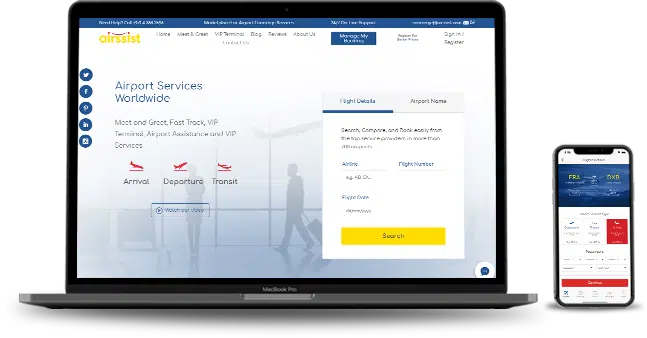
Platforms like airssist help connect airport assistance, ground transfers, and meet-and-greet services with the traveler’s itinerary. This improves coordination between airport movement and scheduled meetings, reducing gaps between planned timings and real-world execution.
Best Practices for Accurate Corporate Travel Itineraries
These practices are used by travel managers who consistently build itineraries that hold up under real conditions.
- Start from fixed commitments. Build the itinerary backward from confirmed meetings, not forwards from the flight. The meeting time is the anchor. Everything else adjusts around it.
- Validate every travel segment with real-time data. Do not rely on Google Maps estimates from a desktop. Use route data that reflects actual traffic conditions at the time the traveler will be on the road.
- Maintain minimum buffer standards. Set a firm travel policy, for example, no meeting scheduled within 90 minutes of an international flight arrival. Stick to it even when the traveler says they will be fine.
- Keep all bookings in a single structured itinerary. One document, one source of truth. Every stakeholder has access to the same version.
- Continuously update the itinerary before and during travel. The itinerary should reflect current conditions throughout the trip, especially when delays or schedule changes occur. With 64% of travel professionals now prioritizing predictive analytics for 2026, the industry is moving toward living itineraries.
Is Your Business Travel Plan Actually Ready for 2026?
Precision is not a luxury in corporate travel planning. It is the baseline requirement for any trip where meetings, partnerships, or client relationships are at stake.
When an itinerary is built with accuracy, every stakeholder knows exactly what to do and when. The difference between a smooth business trip and a chaotic one often comes down to whether someone took the time to verify travel durations, build in buffers, and keep all information in one place.
If you are looking to improve how your organization structures travel logistics from airport arrival to meeting room, it is worth exploring what airport services and traveler support actually look like when done right. A well-planned itinerary backed by reliable ground support is the closest thing to a guarantee that your next corporate travel experience delivers what it is supposed to.
Frequently Asked Questions
Why should I update a corporate travel itinerary in real time?
Business travel plans can change quickly because of delays, traffic, or meeting updates. Real-time itinerary updates help travelers, drivers, hotels, and meeting hosts stay aligned with the latest schedule and avoid disruptions.
How do I manage itinerary changes during a business trip?
The best approach is to use a centralized itinerary system that updates all connected parties automatically. This reduces confusion, missed communication, and scheduling errors during the trip.
Why do corporate itineraries need coordination between teams?
Corporate travel involves multiple people working from the same timeline, including travelers, drivers, hotel staff, and coordinators. Clear coordination helps prevent missed pickups, delayed meetings, and scheduling conflicts.
How does itinerary planning reduce business travel stress?
A clear itinerary removes uncertainty during business travel. When travelers know where to go, when to leave, and who to contact, they can focus on meetings instead of managing logistics.
Note: Please note that the information on this page is generic & subject to change due to fluctuations in airport services. Kindly confirm service availability with our team, as offerings may vary daily.




 1701 1 Lake Plaza, Jumeirah Lakes Towers Dubai UAE


