
 Whatsapp
 Buy Gift Card


 Spanish | Espana
 German | Deutch
 Chinese | 中文(简体)
 Japanese | 日本語


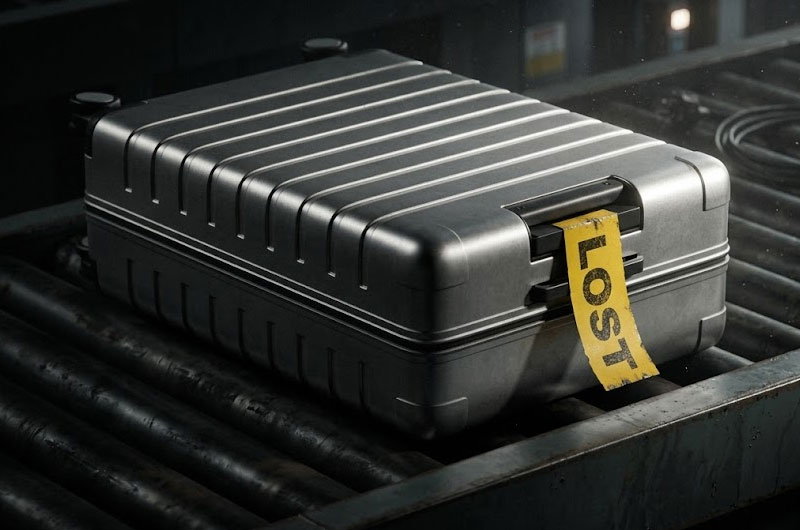
Table of Contents
Your flight lands. You head to the baggage carousel, watching suitcase after suitcase roll by. The crowd starts to thin out, the belt slows down, and then it stops. Everyone has their bags except you. In an instant, excitement about your trip turns into uncertainty.
While most checked bags arrive as planned, lost baggage remains one of the most frustrating travel disruptions passengers face. A missing suitcase can leave you without essential items, delay important plans, and create hours of back-and-forth with airport staff and airlines. For many travelers, the real challenge is not just the missing bag itself but figuring out where to turn and what steps to take next.
What You’ll Learn
- Why lost baggage happens, even with modern baggage tracking systems
- What to do when your luggage doesn’t arrive at the carousel
- The biggest frustrations travelers face during the baggage claim process
- How travel concierge services can help reduce delays and confusion
- When extra airport support is worth considering
How Common Is Lost Baggage? What Millions of Travelers Experience
Missing luggage feels personal when it happens to you, but it’s also a measurable global phenomenon with patterns airlines track closely.
In 2024, airlines handled a record 5.3 billion passengers worldwide, and with that came millions of checked bags moving through hundreds of connecting hubs. The mishandling rate dropped to 6.3 bags per 1,000 passengers in 2024, down from 6.9 the previous year, marking a 67% improvement since 2007. That sounds like good news, and it is. But scale matters here.
- The total number of mishandled bags came to 33.4 million in 2024, with over 66% of those resolved within 48 hours.
- Lost or stolen bags made up only 8% of all mishandled baggage cases, while delayed bags accounted for 74%.
- Region matters too. Asia Pacific leads with just 3.1 mishandled bags per 1,000 passengers, North America sits at 5.5, and Europe trails at 12.3.
So if your flight connects through a busy European hub, your odds of a baggage mishap are statistically higher than a direct flight within Asia. That’s not meant to scare you. It’s meant to explain why some travelers seem to deal with this far more often than others.
IATA’s tracking standard, Resolution 753, requires airlines to scan bags at four key points: acceptance, loading, transfer, and arrival. As of the most recent survey, 44% of airlines have fully implemented this tracking system, with another 41% in progress.
This is exactly why baggage tracking has become so much more reliable in the last few years. When your bag is scanned at each handoff point, airlines can pinpoint exactly where it went missing instead of guessing.
A traveler connecting through a major hub during peak holiday season is far more likely to face transfer mishandling, which remains the single biggest cause of delayed bags worldwide. Meanwhile, a passenger flying direct on a route with strong automated bag drop infrastructure, like several Gulf and Asian hubs now offer, faces a much smaller risk window.
Challenges Travelers Face After Losing Luggage
Knowing the stats is one thing. Living through it is another. Here’s what actually happens to travelers once they realize their bag isn’t coming.
- The immediate panic. You’re standing at an empty carousel with no idea what to do next. Most airports don’t make the baggage claims desk obvious, and signage varies wildly between terminals.
- Long queues at the wrong desk. Many travelers waste 30 to 45 minutes in the wrong line before someone redirects them. Baggage claims and general customer service often sit in different physical locations.
- Language and form confusion. Filing a Property Irregularity Report sounds simple until you’re filling it out in a country where the staff doesn’t speak your language fluently, or the form asks for details you don’t have memorized, like your bag’s exact dimensions.
- No clear timeline. Airlines rarely give a specific recovery date upfront. You’re often told “we’ll be in touch,” which leaves you planning your trip around an unknown.
- Lost essentials mid-trip. Medication, business documents, conference outfits, or children’s items packed in checked luggage create real disruption, not just inconvenience.
- Follow-up fatigue. Calling airline hotlines repeatedly, often on hold for long stretches, becomes its own part-time job during your vacation or business trip.
- Compensation confusion. Knowing what you’re entitled to claim, and proving it, is rarely straightforward without guidance.
This is where the gap between knowing your bag will likely be found and actually getting it back smoothly becomes obvious. The data says most bags return within 48 hours. The lived experience of those 48 hours is what actually wears people down.
Lost Baggage at the Airport: How Concierge Support Makes the Process Easier
This is where structured support changes the picture. A good concierge service doesn’t replace the airline’s job of finding your bag. It removes the friction around everything else.
1. Immediate Direction to the Right Desk
Instead of wandering a terminal looking for signage, concierge staff already know exactly where baggage services sit in that specific airport. This alone can save 20 to 30 minutes of confusion right when you’re already frustrated.
2. Help Filing the Property Irregularity Report Correctly
A concierge familiar with airline procedures helps you complete the PIR with accurate flight details, bag description, and contact information the first time. Mistakes here are one of the most common reasons baggage tracing gets delayed further.
3. Real-Time Baggage Tracking Updates
Many concierge providers can follow up directly with ground handling teams rather than leaving you to call a general hotline. This matters because, as noted earlier, transfer mishandling causes the largest share of delays, and someone with airport access can often get clearer answers faster than a phone queue.
4. Coordinating Delivery to Your Hotel or Next Destination
Once a bag is located, someone still has to get it to you. Concierge teams can liaise with the airline’s delivery partner, coordinate collection arrangements, and confirm delivery timing, so you’re not stuck waiting at a hotel front desk all afternoon. In some airports, porter support can also help make the collection and delivery process easier once your luggage is recovered.
5. Support for Vulnerable or First-Time Travelers
Not every traveler can easily navigate a foreign airport’s baggage office alone. Families with young kids, business travelers on tight schedules, or older passengers benefit enormously from someone walking through the process with them. Services built specifically for elderly assistance often include exactly this kind of hands-on support during baggage issues.
For travelers managing this on top of a packed schedule, particularly executives or teams arriving for events, corporate meet and greet services often fold missing luggage handling into the broader airport experience, so it’s one less thing pulling focus away from the actual trip purpose.
Getting Help Is One Thing. Getting the Right Help Is Another
There are many airport assistance and travel concierge providers operating around the world, each offering different levels of support.
That said, not all providers operate to the same standard. When dealing with a travel disruption as stressful as lost baggage, it’s important to choose a reliable and experienced provider. Some airport concierge providers such as airssist operate under internationally recognized service quality standards, which can provide travelers with greater confidence during stressful situations. When your luggage is missing and time matters, having dependable assistance can make the recovery process far less stressful and much more efficient.
Concierge Support vs Handling the Process Alone
Here’s a direct comparison of what each path typically looks like.
| Situation | Handling It Alone | With Concierge Support |
| Finding the right desk | Often 20 to 45 minutes of searching or asking staff | Direct, immediate guidance to the correct location |
| Filing the PIR | Risk of incomplete or inaccurate details | Form completed correctly with all required information |
| Tracking bag status | Repeated calls to airline hotline, long hold times | Direct follow up through airport contacts where available |
| Language barriers | Can stall the process in non native speaking countries | Concierge staff often bridge language gaps |
| Final delivery coordination | Passenger waits and manages logistics independently | Coordinated handoff, fewer missed deliveries |
| Time cost to traveler | Several hours across the first day, sometimes longer | Reduced to a guided, faster process |
| Stress level | High, especially for first-time or solo travelers | Lower, with a clear point of contact throughout |
| Support for special needs | Minimal unless self-arranged | Built into services for families, elderly, and corporate travelers |
The table makes it clear. The airline’s recovery timeline doesn’t really change either way. What changes is how much energy, time, and stress you personally spend during that window.
Lost Baggage Can Happen to Anyone. Are You Prepared?
By now, you know that lost baggage is rarely just about a missing suitcase. It’s the uncertainty, wasted time, and disruption that make the experience so frustrating. For a short trip or a familiar airport, you might be comfortable handling the process on your own. But if you’re traveling for business, managing a family vacation, or navigating an unfamiliar country, having the right support can make a stressful situation much easier to manage.
Lost baggage will likely become less common as more airlines adopt advanced baggage tracking under IATA Resolution 753. Until then, delays and mishandled bags will remain an occasional reality of air travel. Whether you choose to handle the situation independently or rely on trusted support services, knowing what to expect and acting quickly can help you get back to enjoying your trip sooner.
Frequently Asked Questions
How long does an airline usually take to return a lost bag?
Most delayed or mishandled bags are returned within 48 hours after they are located and traced. However, the exact timeline depends on the airline, airport, and reason for the delay. Bags delayed during a flight connection may take longer to recover.
What information do I need to file a baggage claim?
To file a baggage claim, you’ll usually need your boarding pass or flight confirmation, baggage tag number, a detailed description of your bag, and your contact information. Having a recent photo of your luggage can also help airlines identify it more quickly.
Can I claim compensation for items I buy while waiting for my bag?
Yes, many airlines reimburse reasonable expenses for essential items such as toiletries and basic clothing while your baggage is delayed. Be sure to keep all receipts, as they are typically required when submitting a compensation claim.
Does travel insurance cover missing luggage?
In many cases, travel insurance provides additional coverage for delayed, lost, or stolen luggage beyond what the airline offers. Coverage limits and claim requirements vary by policy, so it’s important to review your plan before traveling.
Are connecting flights more likely to result in lost baggage?
Yes. Connecting flights increase the risk of baggage delays because luggage must be transferred between aircraft. The shorter the layover, the greater the chance that a bag may not make it onto the next flight.
Should I pack valuables in checked luggage?
No. Important items such as medication, travel documents, electronics, and valuables should always be packed in your carry-on bag. This ensures you still have access to essential belongings if your checked luggage is delayed or misplaced.
Note: Please note that the information on this page is generic & subject to change due to fluctuations in airport services. Kindly confirm service availability with our team, as offerings may vary daily.




 1701 1 Lake Plaza, Jumeirah Lakes Towers Dubai UAE


