
 Whatsapp
 Buy Gift Card


 Spanish | Espana
 German | Deutch
 Chinese | 中文(简体)
 Japanese | 日本語


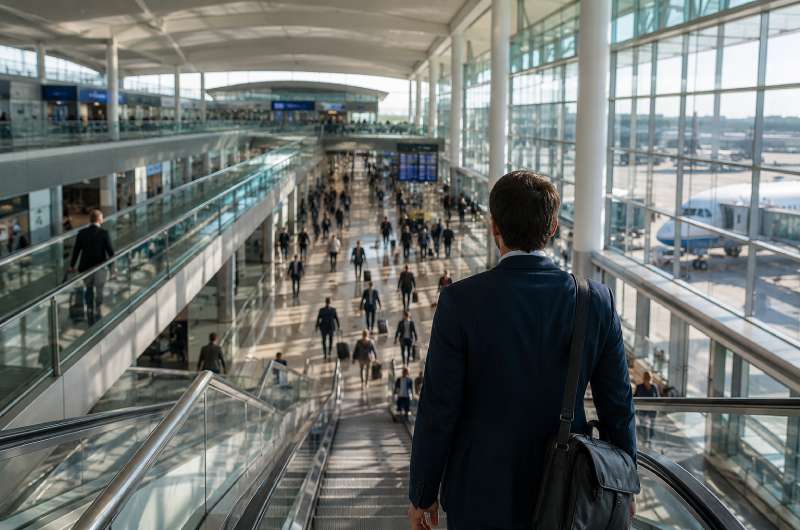
Table of Contents
If you travel often for work, you know how important timing can be at a large airport. Multiple concourses, satellite buildings, security checkpoints, and long walking routes can make a simple connection or airport pickup more complicated than expected.
For business travelers, even a short delay can affect a meeting, transfer, or the rest of the day’s schedule. You need to know how large airport terminals work and where delays can occur so you can plan better connections and move through busy hubs more efficiently.
What You Will Learn in This Guide
- Why airport expansions and complex layouts create unexpected delay traps for passengers.
- The main reasons tight layovers, customs queues, and gate updates cause missed connections.
- How misreading boarding passes and underestimating walking distances lead to missed gates.
- Why ground transport drivers and arriving executives fail to meet up in crowded arrival halls.
What Makes Large Airport Terminals Difficult to Navigate?
Have you ever wondered why walking through a modern transit hub feels like walking across a small city? That is because it practically is one. The world’s largest aviation facilities span dozens of square miles. To handle growing passenger numbers, airport authorities keep adding concourses, terminal wings, and satellite facilities.
Flight punctuality can add another layer of uncertainty when navigating these complex hubs. EUROCONTROL reported 72.6% arrival punctuality and 65.3% departure punctuality across its network in Week 31 of 2026, highlighting why travelers should allow some flexibility when planning connections through busy airports.
Key factors that make these terminals challenging include:
- Long walking distances: At the biggest airport terminals, walking from your arrival gate to your departure gate can easily cover over a mile. Even with automated moving walkways, rushing through crowded corridors takes considerable time and physical effort.
- Complex concourses and people movers: Many major hubs use automated people movers, underground shuttles, or bus transfers to move passengers between gates. If you board the wrong train or get off at the wrong concourse, you can easily waste 15 to 20 minutes heading in the completely wrong direction.
- Heavy passenger traffic: Security checkpoints, passport control desks, and duty-free areas can become crowded during peak hours. When thousands of travelers move through narrow corridors at the same time, walking speeds can slow significantly.
- Sudden gate updates: Terminal maps are not always clear, and signage can sometimes be hard to spot in multi-level buildings. If you are not paying close attention, a simple wrong turn down a long concourse can mean missing your boarding window entirely.
Why Do Travelers Miss Flight Connections at Large Airports?
Large airports can make even a reasonable connection difficult when delays, security procedures, and terminal transfers take longer than expected.
Common reasons for missed connections include:
- Tight layovers: Airlines may sell tickets with minimum connection times that leave limited time for delays. If your incoming flight spends 15 minutes waiting for an open gate, that can significantly reduce the time you have to reach your next flight.
- Immigration and customs delays: When transferring between international and domestic flights, you often have to clear passport control, collect your checked baggage, re-check your bags, and pass through security again. A single long line at passport control can take over an hour during morning rush periods.
- Security re-screening: Some international connections require passengers to go through security again before reaching the departure area. Depending on the airport and itinerary, this additional screening can add another queue before you reach the departure gate.
- Terminal transfers: When your inbound flight lands at Terminal A and your outbound flight leaves from Terminal C, transfers between separate airport terminals require exiting security, riding a shuttle bus, and going back through security lines.
- Cascading flight delays: A delayed inbound aircraft can affect the next flight using the same aircraft, creating additional delays for connecting passengers. BTS includes late-arriving aircraft as one of its reported delay categories.
- Separate-ticket bookings: Booking separate tickets across different airlines can add massive risk. If your initial flight is delayed, the second airline has no legal obligation to rebook you for free or hold the plane. You are left managing the logistics and extra costs all on your own.
Why Do Travelers Miss Their Boarding Gates?
Being inside the airport early does not always mean you will reach your gate on time.
The main reasons travelers fail to reach their gates on time include:
- Last-minute gate changes: Air traffic control and ground operators frequently change gate assignments due to incoming aircraft delays. If you sit down at gate B12 and do not check the flight status boards regularly, you might miss the announcement that your flight moved to gate D4 across the building.
- Underestimating walking times: Seeing “Gate 45” on your boarding pass might sound close, but at a huge hub, gates 1 through 20 might be in one concourse while gates 21 through 50 are located a 25-minute walk away.
- Lounge and restaurant distractions: It is easy to lose track of time while working in a lounge, having a meal, or taking a call. You may check the time and realize you have only 10 minutes to reach a gate that is a 15-minute walk away.
- Misreading airport signage: Complex airports can have separate levels for arrivals and departures, with international and domestic areas in different sections. Following a general “Departures” sign instead of checking your concourse or gate can send you in the wrong direction.
- Strict gate closing times: Airlines usually close gate doors 15 to 20 minutes before scheduled departure to complete load sheets and baggage checks. If you arrive at the gate five minutes before scheduled takeoff, the jetbridge door is likely already locked.
Why Do Airport Pickups Get Missed?
After a long international flight, finding your private driver can be difficult in a busy arrivals hall.
Frequent pickup challenges include:
- Arriving at the wrong pickup point: Large facilities have multiple arrival curbs, split passenger zones, and separate parking structures. If your driver is waiting at the upper departures level while you are standing at the lower arrivals curb, you will spend valuable time playing phone tag.
- Terminal confusion: Some airlines operate out of multiple buildings depending on whether the flight is domestic or international. If your driver checks the general schedule and goes to Terminal 1, but your flight landed at Terminal 2, locating each other gets frustrating fast.
- Flight schedule changes: When flights arrive early or experience unexpected runway delays, drivers may struggle to adjust their arrival times, especially if ground traffic around the terminal is congested.
- Poor communication: International travelers often land without active local mobile data or cellular service. Without internet access, you cannot message your driver, check app updates, or pinpoint your exact pickup door number.
- Congested arrival curbs: Airport security personnel constantly move vehicles along to prevent traffic jams. Drivers cannot sit idly at the curb waiting for you to walk out. If you are delayed at baggage claim, your driver may be forced to circle the airport terminals multiple times before you meet.
The 5 Large Airports Where Connections Can Be Challenging
Different global hubs present distinct layout challenges for travelers. Here is how some of the busiest hubs operate and what you can do to navigate them successfully:
London Heathrow (LHR)
- Why It Is Challenging: Heathrow operates multiple physically separated buildings spread across vast grounds. Transferring between Terminal 2/3 and Terminal 5 requires taking underground trains or transit buses, followed by full security re-screening.
- Best Tip: Always check your departure building as soon as you land, and allow at least 90 to 120 minutes for inter-terminal connections. For stress-free transit, booking London concierge services helps you navigate security lines and shuttle transfers with professional guidance.
Dubai International (DXB)
- Why It Is Challenging: Dubai Airport features massive concourses stretching over long distances. Walking from Concourse A to Concourse C can take significant physical effort, especially during busy late-night connection banks.
- Best Tip: Take full advantage of internal airport trains and moving walkways instead of walking the entire length. Travelers planning tight transfers can benefit from Dubai airport concierge assistance to fast-track through transit security desks.
Istanbul Airport (IST)
- Why It Is Challenging: Istanbul’s single giant terminal building is one of the world’s largest structures under one roof. Because everything is under one ceiling, walking distances between far-flung gates can take up to 30 minutes of continuous walking.
- Best Tip: Monitor information screens constantly and head toward your gate zone early. Utilizing an Istanbul concierge team ensures dedicated staff assist your transit across the massive building.
Paris Charles de Gaulle (CDG)
- Why It Is Challenging: Terminal 2 at CDG is divided into several sub-terminals, including 2A through 2G, with walkways, buses, and trains connecting different areas. The layout can be confusing for first-time visitors.
- Best Tip: Follow the color-coded “Correspondances” transfer signs carefully and double-check your exact sub-terminal letter. Frequent travelers organizing business trips to Paris often rely on Paris meet and greet services to handle terminal transfers efficiently.
Frankfurt Airport (FRA)
- Why It Is Challenging: Frankfurt’s complex layout involves multiple security checkpoints and passport control gates scattered between Terminals 1 and 2. You may have to pass through security checks multiple times during a single transfer.
- Best Tip: Consult the Frankfurt airport guide before travel and allocate extra time for passport queues. Hiring a professional Frankfurt airport concierge can help you move through passport control and security re-screening more efficiently.
How Can You Navigate Large Airport Terminals More Efficiently?
Navigating large airports can be easier with a few simple habits. Planning your route, checking gate information, and allowing enough time for transfers can help you reach your gate on time.
- Download the airport app: Download the official airport app before your trip. Most major facilities offer interactive digital maps with turn-by-turn walking directions, live security wait times, and updated gate listings.
- Check your terminal early: Check your arrival and departure terminal assignments prior to landing. Using onboard Wi-Fi to double-check your arriving gate helps you plan your walk before the aircraft door even opens.
- Monitor gate updates: Monitor flight status displays continuously as you walk through concourses. Gate changes happen quickly during peak hours. Glancing at overhead monitors ensures you do not walk to a gate that was reassigned ten minutes ago.
- Wear comfortable footwear: Keep comfortable footwear handy, especially when traveling on tight schedules. High heels or stiff dress shoes can turn a fast 15-minute power walk into a painful struggle.
- Leave early for distant gates: If your boarding pass lists a gate in a remote satellite concourse, start heading that way as soon as boarding time is announced. Satellite gates often require train rides or bus transfers before you reach the actual waiting area.
- Follow wayfinding signs: Follow airport wayfinding signs rather than relying strictly on personal direction instincts. Wayfinding signs are updated in real time and guide you along the shortest pedestrian paths across airport terminals.
How Can Premium Airport Services Help?
For travelers with tight connections or long walks between airport facilities, professional airport assistance can make the journey easier to manage. Depending on the airport and service booked, assistance may include:
- Meet & Greet assistance: A concierge agent meets you at an agreed location and guides you through the airport, including connections between terminals or concourses.
- Fast Track clearance: Where priority lanes are available, airport assistance can help you use designated security or immigration lanes.
- Porter services: Porters can assist with luggage from baggage claim to your onward transport, reducing the need to carry bags across large terminals.
- Airport buggy transportation: An airport buggy service can provide cart transportation across long terminal areas, subject to airport rules and availability.
- Airport lounge access: Some premium airport services include access to airport lounges where available, giving travelers a place to work or wait between flights.
- Chauffeur coordination: Concierge teams can coordinate with your private driver and confirm the agreed meeting point, helping both sides locate each other after arrival.
These options can be particularly useful for business travelers navigating large terminals or managing tight schedules.
Common Mistakes Travelers Should Avoid
Even experienced business travelers can make simple mistakes that create problems at large airports. Avoid these common errors:
- Booking separate tickets without checking the risks: If flights are booked separately, a delay on the first ticket may not be covered by the airline on your second ticket. Check the rebooking terms before making separate reservations.
- Assuming checked baggage will transfer automatically: Baggage procedures vary by itinerary and airport. Confirm whether you need to collect and re-check your bags during an international or domestic connection.
- Ignoring visa or transit requirements: Some connections require passengers to meet immigration or transit-entry requirements even when they are not leaving the airport. Check the rules for every country on your itinerary before departure.
- Leaving important documents in checked baggage: Keep your passport, boarding pass, visa documents, and other essential travel papers in your hand luggage so they remain accessible during transfers.
- Relying only on your phone: Airport Wi-Fi, mobile data, and battery life are not always reliable. Keep your flight details, terminal information, and important contact numbers accessible offline.
- Waiting until something goes wrong to ask for help: If you are unsure about a transfer procedure, baggage requirement, or airport service, ask airline or airport staff before the situation becomes urgent.
The Terminal Is Huge, But You Don’t Have to Suffer
Modern air travel does not have to feel like a race against time. Large airports will continue to expand, but planning ahead can help you manage connections and stay on schedule. Allow enough time for transfers, check gate updates, use airport maps, and head to distant gates early.
For travelers who want additional assistance, premium airport services such as airssist can provide support with check-in, security, lounge access, and terminal transfers.
Booking a VIP terminal service can give you access to private check-in, lounge facilities, Fast Track services, and direct tarmac transfers, depending on the airport. These services can make it easier to manage long connections and busy terminals.
Frequently Asked Questions
Which airport has one of the world’s largest terminals under one roof?
Istanbul Airport has one of the world’s largest airport terminals under a single roof, covering a vast area with numerous gates, passenger facilities, and long walking routes.
How can travelers estimate walking time inside a large airport terminal?
Check the airport’s official map or app for walking directions between your arrival and departure gates. Look for information about people movers, trains, shuttle buses, and other internal transport that may affect the total transfer time.
What should travelers do if they cannot find their gate?
Check the nearest flight information display and follow signs showing your concourse and gate number. If the route is unclear, ask an airport employee rather than taking an unfamiliar route.
Can airport staff help passengers who are unfamiliar with a large terminal?
Yes. Airport information desks and customer service staff can provide directions, explain transfer procedures, and help passengers locate facilities such as security checkpoints, baggage areas, and departure gates.
Are airport buggy services available to all passengers?
Availability depends on the airport and service provider. Some buggy services are available to general passengers, while others may be reserved for passengers with mobility needs or offered through pre-booked airport assistance.
Note: Please note that the information on this page is generic & subject to change due to fluctuations in airport services. Kindly confirm service availability with our team, as offerings may vary daily.




 1701 1 Lake Plaza, Jumeirah Lakes Towers Dubai UAE


