
 Whatsapp
 Buy Gift Card


 Spanish | Espana
 German | Deutch
 Chinese | 中文(简体)
 Japanese | 日本語



Table of Contents
VIP airport pickup is a coordinated arrival process that moves an executive from the aircraft gate to a waiting vehicle with minimal unassisted time inside the terminal.
When airport transfers are not properly managed, the result is predictable: delayed handovers, misplaced drivers, and executives navigating crowded arrival areas during high-pressure travel schedules.
For executive assistants and travel coordinators, the challenge is not just transportation. It is ensuring that the right airport transfer is executed without disruption, delay, or exposure at any point in the journey.
This is where gate-to-curb coordination becomes operationally important, especially for time-sensitive executive travel.
What You Will Learn in This Guide
- What a VIP airport pickup actually includes (beyond just a car waiting outside)
- Who benefits most from gate-to-curb transfers?
- Why this service is critical for secure executive arrivals
- Practical tips for coordinators and executives
- How platforms support seamless airport arrivals
- Answers to the most common questions about secure airport transfers
So What Does a VIP Airport Pickup Actually Include?
A lot of people assume a VIP airport pickup is just a dressed-up taxi service. It is not. The difference is in what happens before the executive even steps off the plane.
A proper VIP airport pickup typically includes:
- A dedicated meet-and-greet agent positioned inside the terminal, often at the gate or arrival hall
- Fast-track assistance through immigration and customs
- Baggage collection handled on behalf of the traveler
- Direct escort to a pre-positioned, pre-vetted vehicle
- Real-time coordination between the flight arrival and the ground team
The gate-to-curb service model goes even further by managing the actual tarmac handover, especially on private or charter arrivals. From the moment the plane doors open to the second the executive enters the vehicle, every touchpoint is handled by a professional on the ground.
This is especially important at major hub airports where terminals are spread across different concourses and the walk from gate to curb can take 20 to 35 minutes on a busy day. For an executive with a board meeting 45 minutes from the airport, those 35 minutes matter enormously.
Who Actually Uses Gate-to-Curb Airport Transfers?
This is not a service reserved only for heads of state or Fortune 500 CEOs, though they certainly use it. The range of people who rely on gate-to-curb airport chauffeur services is broader than most people expect.
- Executives and C-suite travelers use it because their time has a direct financial value. Every delay in transit is a delay in decision-making.
- Executive assistants and travel coordinators use it because their job is to ensure zero surprises. A failed pickup, a missed connection, or a confused driver can reflect poorly on the entire organization.
- High-value clients and business guests use it when companies want to make a strong first impression. Picking up a major client with a professional airport chauffeur and a seamless arrival experience signals operational competence.
- Government and diplomatic travelers use it because their security requirements demand a controlled, pre-planned movement from gate to vehicle with no unmanaged gaps.
- Event organizers and conference hosts use it when managing multiple VIP arrivals across a single day, often juggling different flights, airlines, and terminals.
Why Gate-to-Curb Transfers Are Essential for Secure Executive Arrivals?
1. The Security Gap Between Gate and Curb Is Real
The airport arrival phase is one of the least predictable parts of executive travel.
Even when flights are on time, movement inside the terminal depends on congestion, immigration queues, baggage flow, and gate positioning. These variables create gaps between landing and exit that are difficult to control in real time.
According to the International Civil Aviation Organization (ICAO), airports handle around 3.6 million international passengers daily, and global air traffic is expected to nearly double over the next 15 years. This level of volume places sustained pressure on airport infrastructure and increases the likelihood of operational bottlenecks during peak arrival periods.
The issue is not just a delay. It is a lack of coordination during a high-density movement environment where passengers are constantly in transition.
A structured gate-to-curb process reduces this uncertainty by aligning ground movement with actual airport conditions rather than relying on static schedules.
2. Time Loss at Airports Is Measured in Business Outcomes
Does a 40-minute airport delay impact business outcomes? Yes. ACI’s ASQ Program, which surveys over 700,000 passengers across 400+ airports, shows that passenger facilitation inefficiencies like queues and fragmented processing increase overall dwell time.
A coordinated, secure airport transfer helps reduce this friction by streamlining baggage handling, clearance, and ground movement, cutting airport-to-vehicle transition time from around 45–60 minutes to under 15 minutes in efficient operations.
3. Professional Chauffeur Services Reduce Operational Risk
What happens when a driver arrives at the wrong terminal due to a late flight update, or when an executive exits from an alternate gate and the vehicle is positioned elsewhere? These situations occur frequently when airport transfers are arranged without live coordination.
A professional airport chauffeur service operates on continuous flight monitoring and real-time updates from the ground team. Instead of passive waiting, the driver adapts to timing shifts, gate changes, and arrival variations. This active coordination reduces dependency on fixed schedules and ensures the transfer aligns with actual landing conditions.
4. Gate-to-Curb Service Protects Executive Privacy
For senior executives, the main risk during airport arrival is visibility in uncontrolled public areas. Arrival halls, baggage zones, and curbside exits are shared environments where movement is exposed and unfiltered. Even brief delays in these spaces can create unnecessary attention.
This becomes more sensitive in situations involving confidential business travel, where presence and timing may indirectly reveal strategic activity. A gate-to-curb process reduces this exposure by limiting time spent in public zones and ensuring direct assisted movement to the vehicle.
In higher-security scenarios, a VIP terminal adds an additional layer by fully separating executive arrivals from public passenger flow through private access points and controlled exits.
5. Multi-City and Tight-Schedule Itineraries Demand Precision
Consider this scenario. An executive arrives in Dubai for a morning meeting with a same-day afternoon connection to London. Their total ground time is under three hours. A 35-minute unassisted terminal walk, a 15-minute baggage wait, and a slow vehicle pickup leave virtually no workable buffer before the meeting begins. One delay compounds the next, and the connection window shrinks to a risk.
IATA’s passenger facilitation program highlights the need for streamlined airport processes, including biometric verification and standardized data exchange, to reduce processing time and improve passenger flow. These system-level improvements reduce delays inside terminals, which directly impacts how quickly passengers reach ground transport. This is where a coordinated VIP airport pickup adds value by ensuring the final transition from gate to vehicle is handled without additional friction or delay.
6. The Vehicle Selection Changes the Tone of the Entire Arrival
Not every VIP arrival requires the same vehicle. An executive arriving for a quiet internal strategy session has different needs than one being received by a client for the first time. An airport limo provides the formality and space for preparation, including reviewing documents and taking calls in a way that a standard car simply does not.
More practically, a well-equipped airport limo provides a private, quiet space between landing and the first engagement of the day, which is genuinely valuable after a six-hour flight.
7. Coordination Failures at Airports Have a Cascading Effect
Here is what a coordination failure at the airport actually looks like in practice. An executive lands, exits at gate B, and the driver is waiting at gate D following outdated pickup instructions. The executive calls the assistant. The assistant calls the driver. The driver cannot move the vehicle quickly due to airport traffic restrictions.
By the time the pickup is resolved, 25 minutes have passed. The first meeting runs short. The second meeting gets compressed. A debrief call is pushed to the following day. What started as a missed pickup has now affected four scheduled commitments and two teams. Structured airport coordination prevents this by ensuring issues are resolved before they reach the executive.
Practical Tips for Coordinators Managing Executive Airport Arrivals
Getting a VIP airport pickup right requires precision across four operational areas. Here is what experienced travel coordinators build into every arrival:
- Assign a clear internal owner for the arrival so one person is actively monitoring the entire pickup process and making real-time decisions if needed.
- Ensure the on-ground team understands airport-specific movement rules, including where vehicles can wait and where handovers are permitted.
- Build operational buffer time into the ground plan to account for immigration variability and terminal walking distance, rather than relying only on landing time.
- Keep communication channels stable and accessible across regions, especially for international arrivals where connectivity or app access may be inconsistent.
- Centralize last-minute instructions through one decision-maker to avoid conflicting directions from multiple stakeholders after landing.
- Set a simple escalation path for on-ground issues so delays, access constraints, or vehicle mismatches are resolved through one controlled channel rather than scattered coordination.
These details seem routine until something goes wrong. At that point, they are the difference between a 3-minute fix and a 30-minute disruption.
How Do Executive Transfer Platforms Support Gate-to-Curb Travel?
Coordinating a VIP airport pickup across multiple vendors, a separate meet-and-greet agent, a fast-track immigration service, and a driver is where most breakdowns happen. Each provider has its own contact, its own timing protocol, and its own definition of “ready.”
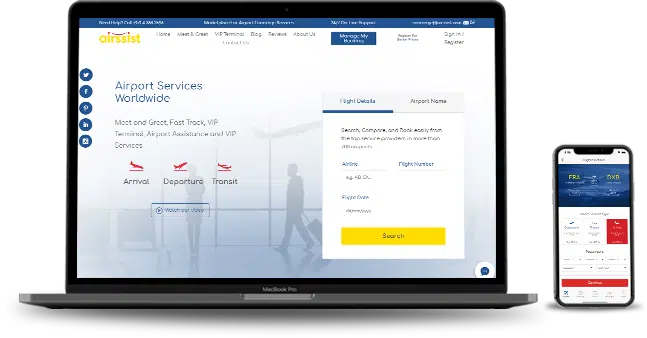
Platforms such as airssist bring these elements together under a single booking across hundreds of airports worldwide. An executive assistant can arrange arrival assistance, immigration fast-track, baggage handling, and onward ground transport through one coordination point rather than managing three separate confirmation threads on the day of travel.
For travel teams managing frequent multi-city executive travel, that consistency across different airports and countries removes a significant coordination risk, particularly when arrivals happen outside business hours or in unfamiliar locations. The airport concierge service model means one point of contact handles everything from gate to vehicle.
The Real Cost of Getting Airport Transfers Wrong
It is worth being direct about what is at stake. A failed airport transfer is not just a logistical inconvenience. It is a reflection on your organization’s operational credibility, especially when the traveler is a client or a senior stakeholder. The cost of a professional, coordinated, secure airport transfer is minimal compared to the cost of a missed meeting, a frustrated executive, or a poor first impression with a key client.
Getting this right consistently requires more than booking a car. It requires a system: proper lead time, reliable providers, clear communication, and backup plans that activate automatically when something unexpected happens.
When an Airport Limo Is the Right Call (and When It Is Not)
An airport limo is the right choice when the executive’s arrival is client-facing, when they need working space immediately after landing, or when the itinerary demands a formal reception. It is also the right choice for late-night or early-morning arrivals in unfamiliar cities, where safety and navigation certainty matter more than cost savings.
It may not be necessary for internal employee pickups, short domestic hops, or situations where the executive specifically prefers a low-key arrival. The point is to match the vehicle to the purpose, not to default to either extreme.
You Have Got the Information. Now Make Sure the Execution Matches It
Understanding gate-to-curb service only matters if it is applied properly in real airport transfer planning. The difference between a smooth arrival and a stressful one usually comes down to having a clear process, reliable coordination, and someone accountable at every step.
This means choosing dependable providers, building airport transfer planning into your travel workflow, and making sure every arrival is handled with consistency, no matter the destination.
When this is in place, VIP airport pickup becomes less of a one-off arrangement and more of a reliable way to manage the right airport transfer for executive travel.
Frequently Asked Questions
What is the difference between a VIP airport pickup and a standard airport transfer?
A standard airport transfer places a vehicle at the arrivals curb. A VIP airport pickup places a dedicated agent inside the terminal, at the gate or immigration exit, who handles customs assistance, baggage collection, and direct escort to the waiting vehicle. The executive never navigates the terminal unassisted, which cuts transition time significantly and removes public exposure entirely.
How far in advance should a gate-to-curb airport chauffeur service be booked?
For standard international arrivals, 48 to 72 hours ahead is the recommended minimum. For high-security travel, peak conference periods, or multi-city itineraries, booking 5 to 7 days out ensures agent and vehicle availability. Last-minute arrangements carry real risk at busy hub airports where both resources may already be committed.
Is a secure airport transfer only necessary for high-profile executives?
No. Secure airport transfers are equally relevant for high-value clients, government travelers, and business guests arriving in unfamiliar cities. The key factor is not seniority but the consequence of delay or miscoordination. When a disrupted arrival creates a meaningful business impact, a structured transfer becomes necessary.
What should a travel coordinator confirm before the executive’s flight lands?
Confirm live flight status, the exact terminal meet point, agent and driver contact details, and the vehicle registration. Ensure the driver has the full-day itinerary so timing sensitivities are accounted for in advance. For international arrivals, verify whether the agent will meet airside or landside, as this varies by airport and directly affects the handover point.
Note: Please note that the information on this page is generic & subject to change due to fluctuations in airport services. Kindly confirm service availability with our team, as offerings may vary daily.




 1701 1 Lake Plaza, Jumeirah Lakes Towers Dubai UAE


