
 Whatsapp
 Buy Gift Card

 Spanish | Espana
 German | Deutch
 Chinese | 中文(简体)
 Japanese | 日本語


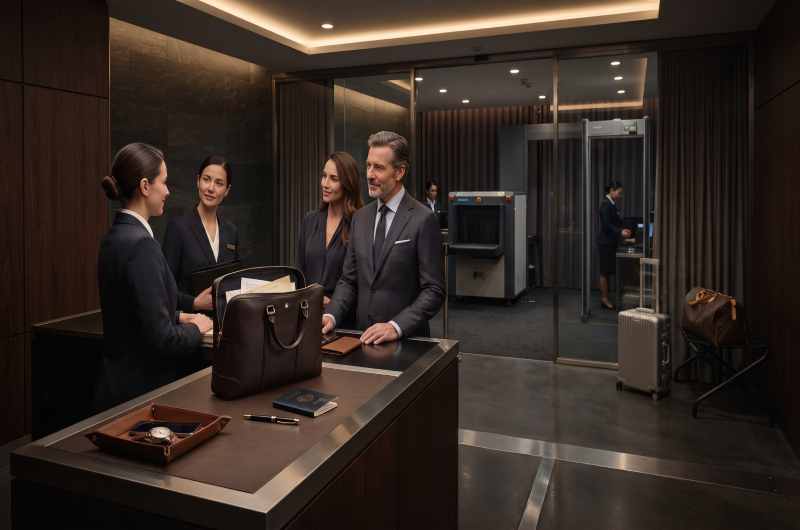
Table of Contents
Declaring high-value items at customs is not a trap set by officers. It is protection. Clear documentation gives an officer an immediate way to verify ownership and the purpose of a trip.
Carrying jewelry on a plane for a wedding, moving art after a purchase, or flying with savings for a large transaction all follow the same principle. Documentation is the safeguard, not the obstacle. Handled correctly, the process moves faster and with far fewer surprises.
Inside This Guide
- How to document jewelry, watches, and art before departure so ownership is never in question
- The TSA jewelry rules that decide whether a bracelet stays on your wrist or goes in a bin
- The paperwork required for bringing artwork through customs, including the ATA Carnet
- The precise, US-specific threshold for declaring high-value items at customs
- How much cash can you fly with internationally, and what changes once you cross that threshold
- Why traveling with large amounts of cash split across bags or people creates legal exposure, not protection
The Four-Step Method for Clearing Customs with Jewelry, Art, and Cash
Step 1: Document Everything Before You Ever Reach the Airport
Documentation should begin weeks before a flight, not the night before. A digital record on a phone or laptop, with a photograph, receipt, and appraisal for each item of meaningful value, is the foundation. Insurance riders belong in the same file. If a piece carries a rider on an existing policy, that document should sit alongside the photograph.
For US travelers, one form carries particular weight. CBP Form 4457 allows jewelry, watches, and other personal effects to be registered with a customs officer prior to departure. Once completed and validated by a CBP officer before departure, it provides documentation that the item was in the traveler’s possession when leaving the United States. Without it, an officer has no straightforward way to determine whether a watch was purchased abroad or has been owned for a decade.
Families traveling together are better served by individual files rather than one shared record, so each traveler can address questions about their own items without searching through another person’s documentation.
Step 2: Pack Expensive Jewelry for Travel Without Drawing Attention
As a general rule, valuable jewelry, watches, and cash should stay in a carry-on rather than checked baggage. Checked bags are lost, opened, and occasionally handled without care, and keeping valuables in a bag that stays with the traveler at all times avoids that risk entirely.
Branded packaging should also be avoided. A recognizable jewelry box or retail pouch signals value to anyone paying attention at a checkpoint. A plain jewelry roll or unmarked case can keep the items less conspicuous during travel.
Cash requires similar discretion. A dense, tightly bound stack of bills may attract additional attention during security screening and could prompt a manual inspection. Distributing bills across a few pockets within one bag, rather than a single thick bundle, allows an officer to review the contents in moments rather than minutes.
Step 3: TSA Jewelry Rules and the Private Screening Request That Works
Understanding the TSA jewelry rules starts with the bins themselves. Keeping jewelry zipped inside a bag until the final moment, with the whole bag placed on the belt rather than individual pieces in an open tray, reduces the risk of misplacement.
The Transportation Security Administration advises travelers carrying valuable items such as jewelry to keep those items with them at all times rather than placing them in checked baggage, and confirms that travelers can ask a TSA officer to screen them and their valuables in private.
Before screening begins, a traveler can simply say: “I am carrying high-value jewelry today. Could I request a private screening?” Procedures and timing vary by airport, and the final decision on how any item is screened rests with the officer on duty.
If an officer asks that a piece be removed, follow the instruction. TSA PreCheck can expedite standard screening, but it does not substitute for a private screening request. Review the actual TSA PreCheck benefits before enrolling.
Step 4: Declaring Cash and International Travel Limits
How much cash can you fly with internationally? The answer depends entirely on which country’s rule applies, so the US rule is worth stating precisely rather than guessing. In the United States, there is no legal limit on the amount of currency or monetary instruments a traveler can carry into or out of the country.
Anyone traveling with large amounts of cash simply needs to report anything exceeding $10,000 in aggregate to CBP using FinCEN Form 105, a step still commonly known as the CBP Form 4790 cash declaration under its earlier name. Other countries set their own thresholds and use different declaration forms, so travelers connecting through multiple countries should check each one’s requirements separately.
The form itself is brief. What matters more is the traveler’s response during the interview. Officers typically ask about the source and purpose of the funds. A direct, one-sentence answer, such as “this is savings for a property deposit” or “this is a gift for my daughter’s wedding,” is more effective than an elaborate explanation. A composed, concise, and truthful response moves the interview along quickly.
For travelers weighing whether the security line itself is the larger inconvenience, comparing options is worthwhile. The fast track versus TSA PreCheck comparison outlines which option delivers more time savings depending on flight frequency and the checkpoints most frequently encountered, and it’s also worth knowing whether the TSA PreCheck cost for families pays off before enrolling everyone in the household.
Three Things Travelers Often Miss About Customs for Jewelry, Art, and Cash
- Moving Fine Art Across Borders Customs: An ATA Carnet allows qualifying artwork to move temporarily across borders without paying the usual import duties and taxes, subject to local rules. It must be arranged before travel. The United States Council for International Business states that the carnet system is recognized in more than 80 countries and territories.
- Cash Divided Between Bags Counts as Structuring: Dividing cash between bags or travelers does not avoid reporting requirements. If the total exceeds $10,000, the full amount must be declared, and deliberately structuring transactions to avoid reporting can lead to criminal penalties.
- Standard Travel Insurance Won’t Cover Your Jewelry or Art: Standard policies often place low limits on jewelry coverage. The Insurance Information Institute notes that homeowners and renters policies commonly limit jewelry theft coverage to around $1,500. High-value items may require specialist coverage.
Make Airport Formalities Easier When Traveling With High-Value Items
Document valuables before departure, keep jewelry, watches, and cash in your carry-on, request private screening when needed, declare the full cash amount, and arrange an ATA Carnet for artwork when required. Check your insurance limits before traveling.
For additional airport support, airssist, an airport concierge service provider with experience assisting international travelers, offers meet and greet and fast track services. These services can help reduce waiting and provide assistance through airport formalities. We do not replace customs declarations or security checks, but we can make the process more organized when traveling with high-value items.
Common Questions About Declaring High-Value Items at Customs
What is CBP Form 4457 and when do I need it?
CBP Form 4457 is a certificate used to register personal items with U.S. Customs and Border Protection before leaving the United States. It can help document that jewelry, watches, cameras, and other valuable personal items were owned before departure, making it easier to establish that they were not purchased abroad when you return.
Can customs seize my cash or jewelry if I skip the declaration?
Yes. Customs authorities can detain or seize undeclared cash, jewelry, or other goods when a declaration is legally required. Depending on the circumstances, travelers may also face penalties, forfeiture proceedings, or criminal consequences.
What actually happens after I declare over $10,000 in cash entering or leaving the US?
After declaring more than $10,000 in currency or monetary instruments, CBP may review the declaration and ask about the money’s source and intended use. Declaring the funds does not itself make them illegal or subject them to tax. The traveler must provide accurate information and comply with any additional inspection.
Can I insure my jewelry or art specifically for flying?
Yes. Jewelry and artwork can often be covered through scheduled-item policies, valuable-articles coverage, or specialist insurance. Coverage limits vary, so check whether the policy covers the item’s full appraised value, international travel, loss, theft, and unexplained disappearance.
Do I have to declare jewelry that I already owned before traveling abroad?
Not necessarily. Jewelry you already owned before leaving the United States generally is not treated the same as jewelry purchased abroad. Keeping proof of prior ownership, such as a receipt, appraisal, insurance record, or CBP Form 4457, can help establish that the item was not acquired during the trip.
Sources
U.S. Customs and Border Protection, “Money and Other Monetary Instruments,”
https://www.cbp.gov/travel/international-visitors/kbyg/money
U.S. Customs and Border Protection, “Registration for Dutiable Personal Articles Prior to U.S. Departure,”
https://www.cbp.gov/travel/clearing-cbp/certificate-registration
U.S. Customs and Border Protection, “What to Expect When You Return,”
https://www.cbp.gov/travel/us-citizens/know-before-you-go/what-expect-when-you-return
Transportation Security Administration, “Jewelry,”
https://www.tsa.gov/travel/security-screening/whatcanibring/items/jewelry
United States Council for International Business, “ATA Carnet Countries,”
https://uscib.org/ata-carnet-export-service/countries/
Insurance Information Institute, “Floaters and Endorsements: Special Coverage for Valuables,”
https://www.iii.org/article/do-i-need-special-coverage-for-jewelry-and-other-valuables
Note: Please note that the information on this page is generic & subject to change due to fluctuations in airport services. Kindly confirm service availability with our team, as offerings may vary daily.




 1701 1 Lake Plaza, Jumeirah Lakes Towers Dubai UAE


