
 Whatsapp
 Buy Gift Card


 Spanish | Espana
 German | Deutch
 Chinese | 中文(简体)
 Japanese | 日本語

Table of Contents
Business travel for startups is not a luxury. It is often a growth engine. Most investor meetings, networking, pitching to clients, partnerships, growing market are usually the activities that demand face-to-face interaction. However, the problem is the following: how to expand your traveling needs without emptying your runway?
Startups are not run similar to big companies. Every dollar matters. Each journey has to be worth its price.But when properly structured, equipped and minded, business travel for startups can be an asset rather than a liability.
Let’s take a closer look.
Quick Summary
Travel is necessary to expand, establish relationships and raise funds, yet uncontrolled travel is likely to raise burn rate in a short period. Costs are controlled with the help of a clear policy, smart technology tools, flexible booking strategies, and duty-of-care planning. Business traveling is an investment, rather than an expense, when managed tactfully.
Why Startups Still Need Business Travel (Even in a Digital World!)?
In a digital-first economy, the “flight to quality” is a literal phenomenon. While virtual meetings handle the routine, the most aggressive startups are doubling down on travel because the ROI is hard-coded into the data.
The Global Business Travel Association (GBTA) says that the world was expected to spend over 1.57 trillion in 2025, a consistent increase ever since 2024 will be 1.47 trillion. This is not merely corporate inertia; notwithstanding, one study of 2025 has determined a net operating margin of a $14.60 return per $1 invested in business travel in the U.S. companies.
In the case of scaling start-up, this would translate into the competitive advantage of astounding proportions since face-to-face interaction leads to the conversion of prospects in every 40th of the case, whereas virtual-only pitching results in 16th.
Beyond the bottom line, the survival statistics are also very compelling. Recent surveys among the industry and Harvard Business Review in particular have verified that a 95 percent of the professionals regard meetings in person as the gold standard of developing long-term trust.
So yes, business travel for startups remains essential. The key is controlling how you do it.
8 Practical Business Travel Tips for Startups to Grow on a Small Budget
Now we will proceed into implementation. This is where planning meets discipline.
1. Start With an Airtight Travel Policy (No, It Doesn’t Have to Be Complicated!)
In its absence, travel expenditure is reactive. Someone books last-minute. Another opts to select a luxurious hotel. Expenses pile up. Sound familiar?
Your foundation is a travel policy.
What Should It Include?
Define Business Necessity
It is not true that every meeting involves a flight. Explain what trips are eligible, investor events, client meetings on expansion, research on expansion, major industry events.
Set Spending Limits (Per Diem)
Create daily allowances for:
- Meals
- Hotels
- Local transportation
This does not expose the company to unnecessary expenditure and leaves the employees with leeway.
Booking Window Rules
Insist on booking the flights 14 to 21 days prior in advance. Last minute fares may increase by 30 to 50 percent. Booking behavior itself is shifting. Airline website usage dropped from 37% in 2024 to 31% in 2025, while 19% of travelers now prefer booking directly through mobile apps; a number that rises to 25% among younger founders and executives. Encouraging app-based booking within your policy can improve price tracking, speed, and flexibility.
Preferred Providers
Establish connections with some air companies and hotel groups. Its loyalty eventually comes with discounts and upgrades.
An uncomplicated and straightforward document avoids confusion and costs. That’s scaling smart!
2. Use Technology Like a Pro (Because Manual Tracking Is Risky!)
During the initial stages, spreadsheets suffice. But as you grow? Not scalable.
It is possible through modern expense and travel management tools that enable:
- Expenses monitoring in real-time
- Scanning receipt through mobile applications
- Automated approvals
- Integration with accounting systems
- Online company cards with pre-determined budget
Such platforms as Ramp, Expensify, Zoho Expense, or Navan gather bookings in one place and assist in keeping things in order. Payment systems are evolving just as rapidly. Credit and debit card dominance fell from 79% to 72% in just one year, while digital wallet usage surged to 28%, alongside instant payment methods like IATA Pay. Integrating digital wallets with company cards simplifies expense capture, reduces fraud risk, and improves reconciliation accuracy; critical for startups watching every dollar.
If you want to optimize business travel further, the existence of centralized systems of booking provides data insights. You will begin to notice patterns: What are the routes that are expensive? What are the best valued hotels? Where can savings be made?
3. Smart Cost-Saving Strategies That Actually Work
Reduction of travelling expenses does not imply a reduction in quality. It means being strategic.
Flexible Travel Dates
Traveling on the Tuesday rather than Monday morning could save a lot of money. Without being repetitive, it is always advisable to avoid peak times.
Encourage Carry-On Only
Baggage fees add up. Light packing saves on fees and time. The rise of self-service logistics reinforces this approach. Electronic bag tag usage jumped to 35% in 2025, allowing travelers to generate tags directly from their smartphones and bypass check-in desks entirely. For startup teams, that means less waiting, faster airport flow, and more productive travel time.
Strategic Accommodation
Instead of luxury hotels:
- Choose hotels that are business friendly in terms of free breakfast and Wi-Fi
- Be nearer to meeting places in order to save on transportation
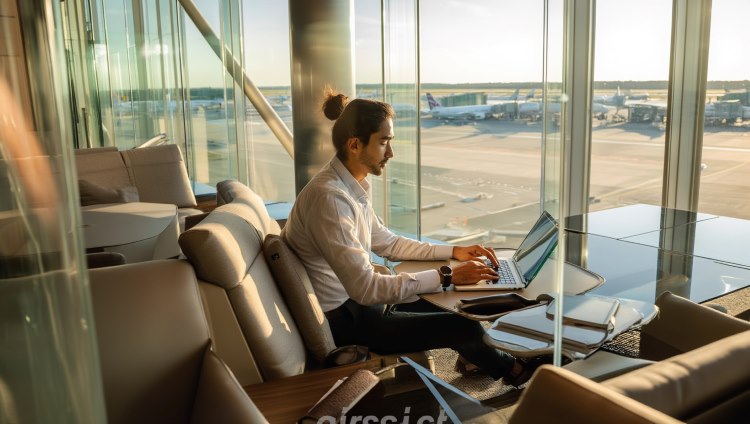
Sometimes access to a professional environment matters more than luxury. That’s where business lounge access becomes powerful.
Many startups use lounges for meetings, Wi-Fi, and quiet workspaces; a practical strategy that shows how VIP lounge access can function as a real business tool rather than just a comfort perk.
Leverage Loyalty Programs
Rewards programs in the airlines and hotels are able to:
- Provide free upgrades
- Provide reduced future reservations
- Grant priority services
This accumulates to huge savings over a period.
4. Scale Smart With Approval and Incentive Systems
Increased travel requests are associated with the growth of startups. Chaos ensues when nothing is controlled.
Implement Pre-Trip Approvals
This is mandatory: manager must approve a booking. This ensures:
- Budget alignment
- Clear trip purpose
- No duplicate or unnecessary travel
Incentivize Smart Spending
Some startups reward employees who save money within policy. Imagine allowing team members to keep a small percentage of savings. Suddenly cost awareness increases!
Distinct Business From Leisure
“Bleisure” travel is growing. However, your policy should explain what is and what is not included.
For deeper insights into this dynamic, check the discussion on leisure vs business travel.
Separate entities prevent confusion and tax related problems.
5. Don’t Ignore Travel Risk Management (Duty of Care Matters!)
Scaling startups tend to pay attention only to cost. But what about safety?
More than 60 percent of the firms have shifted their priorities to traveler safety tracking systems. Trips may be disrupted by emergency incidents, weather crashes or political instabilities.
Startups should:
- Monitor the location of the employees when traveling
- Emergency contact provision
- Observing the risk of destinations
It is at this point that structured travel risk management comes in. It safeguards your workers and also that of your firm. A healthy and rested employee is a better worker. Safety isn’t an expense. It’s protection.
6. Choose Destinations Strategically (Growth Markets Matter!)
Not all markets are worth immediate investment in travelling.
In case of expansion, research:
- Industry demand
- Investor presence
- Startup ecosystems
- Accessibility
Certain cities are the world centers of innovation. Startups can use the top business travel destinations to get started in line with growth opportunities.
In case you are aiming to enter into partnerships with the industry giants, it is also possible to research the profiles of business tycoons to understand the places where influential players are operating.
Travel will be more effective when it is strategic.
7. Sustainability Isn’t Optional Anymore
The modern investor and customers are more environmentally responsible.
IATA has also engaged the aviation sector to achieve a net-zero carbon emission by the year 2050. Startups can align with this by:
- Purchasing carbon offset airlines
- Making direct flights where possible
- Minimizing unproductive travel
To get a more in-depth picture, consider how to make business travel practices sustainable and at the same time not undermine growth.
Intelligent travel is conscientious travel.
8. Make Airports Work for You (Yes, Even Layovers!)
Airports have ceased to be waiting areas. They’re productivity spaces.
Instead of wasting time:
- Use lounges for focused work
- Conduct quick meetings
- Pre-presentation recharge
Other startups even go ahead to book meeting rooms conference space in the airport just to get the maximum out of it even in times when there is a tight schedule.
Services like airssist can also support travelers with concierge assistance, fast-track services, and smoother airport transitions. It’s not about luxury. It is a question of saving time, and eliminating stress so founders might get down to high-impact conversations.
After all, when pitching investors, do you want to arrive stressed or prepared?
Business Travel for Startups Is About Strategy, Not Spending
At its core, the idea of business travel for startups is supposed to be purposeful. Every trip should answer:
- What is the ROI?
- Is this meeting high-value?
- Is it possible to have two or more goals on the same trip?
Travel then becomes scalable when the startups shift reactive bookins into structured management. Costs become predictable. Growth becomes measurable.
So, How Do You Grow Without Overspending?
The honest truth is this: You do not get rid of travel. You optimize it.
With:
- A clear policy
- Smart tech tools
- Flexible booking
- Risk management systems
- Strategic destinations
- Sustainable planning
You make business fravel for startups your competitive advantage.
And yes, tools, lounge access, concierge services, and centralized expense platforms all help reduce friction without increasing waste.The goal isn’t to spend more on business trips. It’s to manage them wisely.
Scaling is exciting. Overspending? Not so much.
FAQs About Business Travel for Startups
How can startups control business travel expenses effectively?
Startups should implement a clear travel policy, use centralized booking platforms, and track expenses in real time with automated software. Pre-trip approvals and defined per diem limits prevent overspending. Flexible booking and loyalty programs also reduce long-term costs. The key is proactive management, not reactive corrections.
Is business travel necessary for early-stage startups?
Yes, especially for fundraising, partnerships, and enterprise sales. In-person meetings often build trust faster and close higher-value deals. However, travel should always align with strategic goals. Not every meeting requires a flight.
What are the 4 P’s of startup?
The 4 P’s of a startup typically refer to Product, Price, Place, and Promotion. These pillars guide how a startup develops and markets its offering. A strong product solves a real problem, pricing aligns with value, place ensures proper distribution, and promotion builds awareness. Together, they shape early growth strategy.
What are the 5 stages of small business growth?
The five stages are Existence, Survival, Success, Take-off, and Resource Maturity. Early stages focus on market validation and cash flow. Later stages emphasize scaling systems and delegation. Travel needs often increase significantly during Take-off.
What are the 5 basic needs in business?
Businesses require Capital, Customers, Talent, Operations, and Strategy. Without capital, growth stalls. Without customers, revenue disappears. Talent drives execution, operations ensure efficiency, and strategy aligns direction. Business travel often supports customer acquisition and strategic expansion.
Sources
IATA: 2024 Passenger Demand Record https://www.iata.org/en/pressroom/2025-releases/2025-01-30-01/
Gable: The Value of In-Person Meetings https://www.gable.to/blog/post/in-person-meetings
Harvard Business Review: Managing Across Distance and Face-to-Face Value https://hbr.org/sponsored/2016/04/managing-across-distance-in-todays-economic-climate-the-value-of-face-to-face-communication
GBTA: U.S. Firms and the $2.4 Trillion Sales Opportunity https://gbta.org/u-s-firms-could-unlock-2-4-trillion-in-sales-by-optimizing-business-travel-new-gbta-study-finds/
Note: Please note that the information on this page is generic & subject to change due to fluctuations in airport services. Kindly confirm service availability with our team, as offerings may vary daily.






 Dubai, United Arab Emirates


