
 Whatsapp
 Buy Gift Card


 Spanish | Espana
 German | Deutch
 Chinese | 中文(简体)
 Japanese | 日本語

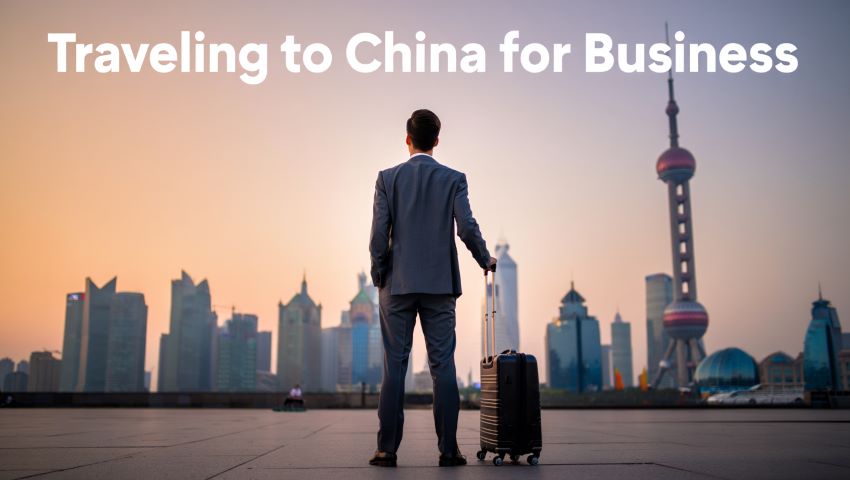
Table of Contents
Is this your first time on a business trip to China? Or might this be your fifth time traveling to China, and you are a seasoned tourist? New policies are making business travel to China easier, but the ground rules for travel have changed significantly. New regulations and restrictions make it much less of a “suitcase and a handshake” type of travel.
Now, you must navigate a tech-driven, relationship-based system where being unprepared is the biggest risk to your time and money. This guide will be the best starting point to help you reach your destination and complete the business.
Quick Summary
China is open for business. In fact, China is more open than it has ever been in recent years. Even regarding business visas for China, access is much easier than before. Business travelers to China may stay for up to 30 days without a visa, depending on nationality. Of course, advanced business travel in today’s economy is different from what it was 10 years ago, so do not approach your travel in China the same way you would have 10 years ago. To be successful, you must combine cultural respect, digital mastery, and high-end logistics at a level that has likely never been required before for business travel.
The Scope of Business in China: Why it is Vital
While international business travel has its advantages, the ability of companies and luxury brands to travel to China and visit suppliers is a significant competitive edge in the market. From the advanced technology in Shenzhen to the financial hubs in Shanghai, China’s manufacturing and innovation are on a scale unmatched by any other country.
Latest data from the Official Airline Guide (OAG) show that Shanghai Pudong International Airport (PVG) is the busiest airport for international business traffic, handling over 76.7 million passengers and serving as a key hub for global finance.
For the VIP traveler, business manager, or travel agent, the signed contracts are not the only valued part of the trip. There is also the business concept of Guanxi, the deep interconnectedness created when you share a meal and walk the factory grounds. This trip shows a level of dedication that a simple video call cannot achieve. In business with the Chinese, your physical presence is the most valuable asset at the table.
10 Key Things to Know for a Business Trip to China
1. China Visas for Business Travel That Help You Avoid Costly Mistakes
The most important part of a trip is also the first challenge: making sure you have the correct documentation. Although many travelers today benefit from visa-on-arrival, a large percentage still require a visa in advance.
- An M Visa is for most travelers, since it is intended for business and trade activities.
- An invitation letter from your business partner in China is usually necessary.
- China has a 144-hour visa-free transit policy for more than 50 countries, including the US, the UK, and Canada, for those flying to a third country.
By the end of 2025, several countries will benefit from 30 days of unilateral visa-free entry. Always check with an official source, such as the IATA Travel Centre, to verify your eligibility and ensure you have the correct China visas for business purposes.
Curious if China business visas are available on arrival? Learn more HERE.
2. Digital Wallets and Mobile Payments Let You Pay Like a Local in China
Gone are the days of carrying bundles of cash or having a leather wallet filled with credit cards. China is a mobile-payment society.
- International credit cards are often not accepted, except at select luxury hotels and high-end shopping centers.
- You must download Alipay or WeChat Pay and link your foreign Visa or Mastercard before you arrive.
This is how you will pay for almost everything, including a bottle of water or a high-speed train ticket. Without this, you will be unable to participate in the local economy.
3. Airport Concierge Services Make Travel Stress-Free From Landing to Meeting
Chinese airports are among the biggest and most complex in the world. Arriving at Beijing Capital (PEK) or Shanghai Pudong (PVG) can be overwhelming.
- A welcoming agent meets you at the arrival gate and helps guide you through health declarations, immigration, and customs.
- They serve as a buffer against the language barrier and ensure you reach your ground transportation without hassle.
- They usually offer meet-and-greet services that include luggage handling and fast-track immigration.
4. Private or VIP Terminals Maximize Efficiency and Privacy
For the ultra-wealthy or C-suite executives, private or VIP terminals, often called FBOs, offer a level of discretion and streamlined service that the main terminal cannot provide.
- These facilities allow for fast and private security and immigration processes away from the crowds.
- They provide secure spaces to hold sensitive business briefings or take confidential calls after landing.
- They also offer private airport lounges with high-quality dining and business suites.
5. Chauffeured Transportation Versus Local Taxis Helps You Travel Smart
While local ride-hailing services like DiDi are available, they are often difficult to navigate for travelers who do not speak Mandarin.
- Pre-arranged chauffeured transportation provides seamless service and is considered the gold standard.
- A professional driver who understands manufacturing and financial districts is invaluable.
This helps you avoid searching for vehicles in large parking garages or struggling to communicate destinations.
6. Staying Connected in China Helps You Beat the Great Firewall
One of the biggest challenges of business travel to China is staying connected, as many Western platforms, such as Google, LinkedIn, and Outlook, are restricted.
- To maintain access to business tools, you will need a prepaid VPN or an advanced roaming plan.
- Many experienced travelers prefer a dedicated roaming eSIM or international SIM card, which often bypasses restrictions more reliably than software-based VPNs.
- Ensure your company’s IT department has approved your devices for local networks.
7. Mastering Business Etiquette and “Face”
China’s business culture is formal. The concept of “Face,” or Mianzi, relates to reputation and social standing.
- Business cards are exchanged as a ritual. Always use two hands and take a moment to read the card before putting it away.
- Never publicly criticize a business partner or supplier, as this results in a loss of face and can permanently damage relationships.
- Punctuality is a sign of respect. Being late may be interpreted as an insult.
8. Gaining Access to Airport Lounges for Working and Relaxation
Due to the vast distances between Chinese cities, you are likely to have domestic transfers.
- Access to quality airport lounges is not just about comfort, but productivity.
- Reliable Wi-Fi, power outlets, and quiet spaces allow you to continue working between flights.
This ensures travel time does not become lost productivity.
9. Strategic Planning for Visiting Suppliers
When visiting suppliers in China, remember that manufacturing centers such as Dongguan or Ningbo may be several hours from major airports.
- Include buffer time for traffic, especially in industrial regions.
- Inspect production lines, quality control points, and storage facilities in person.
- A flexible schedule and personal chauffeur help ensure smooth travel without missing flights.
10. Health and Safety Precautions
Although China is generally safe for travelers, it is wise to remain mindful of local health and safety practices.
- Carry international travel health insurance that includes emergency evacuation, and keep digital copies of vaccination records.
- Keep your hotel name and address written in Chinese in case your phone battery dies.
- Drink bottled water and be cautious with street food before important meetings.
Skipping These Steps Can Ruin Your Business Trip
Ignoring these preparations can derail your trip. Imagine finishing an important dinner only to be unable to pay because your credit card is declined, and you do not have a local payment app. This results in a serious loss of face for both you and your host.
Failing to arrange a meet-and-greet or a chauffeur could result in missed meetings due to long immigration lines or confusion at transit hubs. Without connectivity, you may not be able to access your presentation.
Services like airssist can help coordinate meet-and-greet, lounge access, and transportation so you avoid these hassles. In China, being unprepared can determine the difference between successful business expansion and a failed venture.
FAQs: What to Know About Traveling to China for Business
How far in advance should I apply for business visas to China?
The minimum recommended timeline is four to six weeks before departure. While expedited options exist, documentation requirements are strict, and errors can cause delays.
Do solo travelers benefit from airport concierge services?
Yes. A solo traveler can save sixty to ninety minutes in airport transit time, which is valuable for meeting preparation.
Can I use Google Maps for navigation?
China does not rely on Google Maps. Apple Maps works for basic navigation, while Baidu and Gaode are preferred locally. Saving destinations in a translation app is advised.
What dress code should I follow when meeting suppliers in China?
Business formal or smart casual is expected, even in factories. Overly casual clothing can be seen as disrespectful.
Is it necessary to use a private terminal?
While not mandatory, private or VIP terminals are recommended for travelers who prioritize time efficiency and security.
Winning in China Even When It Feels Complicated
A business trip to China is always challenging. Using professional airport concierge services, securing China visas for business early, and mastering the digital landscape all contribute to smoother travel. The goal is to let the logistics fade into the background so your business objectives can take center stage.
New to China? Learn the insider tips that will save you time and hassle.
Sources
- IATA Travel Centre – Passport, Visa & Health Requirements
https://www.iata.org/en/services/compliance/timatic/travel-documentation/ - OAG – China Aviation Market Flight Data
https://www.oag.com/china-aviation-market-flight-data - U.S. Department of State – China Travel Information
https://travel.state.gov/content/travel/en/international-travel/International-Travel-Country-Information-Pages/China.html
Note: Please note that the information on this page is generic & subject to change due to fluctuations in airport services. Kindly confirm service availability with our team, as offerings may vary daily.






 Dubai, United Arab Emirates


