
 Whatsapp
 Buy Gift Card


 Spanish | Espana
 German | Deutch
 Chinese | 中文(简体)
 Japanese | 日本語

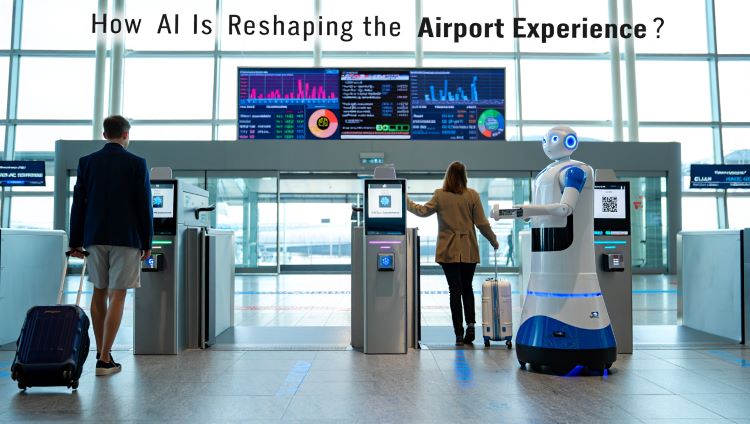
Table of Contents
Improving consumer travel experiences has become a focus at international airports. Reduced wait times, faster check-in, faster security, improved baggage tracking, and more efficient travel experiences make travel less of a hassle and more predictable. All this is due to the adoption of artificial intelligence.
How about we see how artificial intelligence is reshaping the airport experience?
Quick Summary
AI streamlines travel by improving efficiency, reducing delays, and simplifying airport processes. It helps travelers enjoy seamless experiences when paired with services such as meet and greet, personal travel concierge support, and VIP terminal access.
Let’s Talk About How AI Is Actually Changing the Airport Experience
Airports are implementing AI as more than a technical upgrade. It represents a complete shift in how airports operate and how travelers move through terminals.
Below are the top ten ways AI is transforming the airport experience today.
1. Getting Through Check-In Has Never Been This Fast
Travelers often complain about long check-in lines. AI-enabled kiosks scan passports, match photos using facial recognition, and pull up bookings in seconds. Passengers no longer need to wait in long lines and can complete the check-in process independently.
Airports manage passenger flow more efficiently, avoiding overcrowded waiting areas. This is one of the clearest ways artificial intelligence is reshaping the airport experience.
2. AI takes the pressure off security lanes
Security is one of the most stressful parts of air travel. AI improves this by automating threat detection with smart scanners that analyze luggage more effectively. Instead of manually reopening bags, AI quickly identifies items that require further screening.
ICAO has highlighted AI’s role in strengthening cybersecurity through autonomous detection and response to potential threats within aviation systems, contributing to safer and more resilient air travel.
Passengers benefit from shorter lines, fewer bag rechecks, and quicker movement through the terminal. These improvements are especially noticeable at large, high-volume airport hubs.
3. No more guessing what line is shorter
AI systems use cameras and sensors to monitor foot traffic and detect crowd build-up. Airport teams can quickly redirect passengers to less congested areas, ensuring smoother movement through security, immigration, check-in, and boarding zones.
This is particularly helpful at major hubs such as Dubai International Airport. Travelers experience less congestion, reduced confusion, and a smoother travel flow.
4. AI Predicts Delays Before They Become Problems
AI helps predict delays, gate changes, and weather disruptions before they occur. AI at airports analyzes millions of data points, including weather signals, flight history, and runway activity.
Airlines receive early alerts and can update passengers more quickly. Real-time insights help travelers plan their movements better, especially when coordinating with chauffeurs or airport concierge teams.
5. AI makes sure your baggage does not go missing
Losing luggage is one of the most frustrating travel experiences. AI systems reduce this frustration by using automated baggage scanners, smart barcode tracking, and RFID technology to monitor luggage location.
These tools track each bag in real time and alert staff if luggage is placed in the wrong location or needs extra attention.
6. Your phone becomes your private travel assistant
Many airports now use AI-powered navigation tools that guide passengers step by step. These tools notify travelers about gate changes, provide updates on baggage belts, and alert them when lounges are available.
This technology is especially helpful for first-time travelers or anyone navigating large, unfamiliar airports.
7. AI makes premium lounges more efficient
Airports are using AI to improve premium lounges. Predictive AI helps lounges avoid overcrowding, improve staffing, and manage food supply more accurately. AI can even automatically adjust temperature settings. Some airports are also introducing service robots in lounges to assist with cleaning, guidance, and guest support, helping maintain a smooth, comfortable environment.
This creates a more refined and comfortable environment for travelers. While many enjoy these upgrades, some prefer a fully tailored experience, which is why VIP Terminal services remain a top choice.
8. AI Chatbots Assist Travelers All Day
AI chatbots on airport and airline websites help travelers find answers quickly. They provide information about flights, baggage rules, terminal details, and available services. IATA’s innovation programs support responsible AI adoption in airlines, encouraging data and AI professionals to collaborate on advancing AI chatbot implementations and other AI-driven solutions for aviation.
Travelers no longer need to wait for an agent or search manually. Instant answers improve satisfaction and reduce stress.
9. Behind the scenes, AI keeps everything moving
Behind the scenes, airport operations involve ground crew coordination, runway scheduling, taxiway management, and aircraft movement. AI helps predict runway congestion, improves aircraft parking accuracy, streamlines fueling and catering, and reduces taxiway delays.
Efficient backend operations lead to fewer flight delays and a smoother passenger experience.
10. AI Makes Airports More Eco-Friendly
AI helps airports advance sustainability goals. It manages lighting, temperature control, ventilation, and overall energy usage more efficiently.
By analyzing real-time passenger movement, AI adjusts airport systems to balance comfort with reduced energy waste, supporting long-term environmental responsibility.
Even With AI, Human Assistance Still Matters
Airports are more advanced than ever, but premium travel experiences still rely heavily on human services, and airssist continues to bridge that gap by offering travelers personalized assistance beyond what automation can provide.
Easier Travel With Meet and Greet Services
Meet and Greet assistance helps travelers skip long lines, handle baggage comfortably, and reach their gates without stress. AI supports system efficiency, but human touch provides confidence and personalized support.
Concierge Services for Complex Travel Needs
AI cannot replace empathy, real-time decision-making, or quick problem-solving. Concierge teams help with tight connections, elderly travelers, special requests, and unexpected travel issues. Together, AI and human support create the most seamless journey.
VIP Terminal Services for Maximum Comfort
Some travelers prefer complete privacy and dedicated personal service. VIP Terminal services offer exclusive lounges, private processing, and attentive staff. AI handles operational efficiency behind the scenes while humans create a premium experience, so consider going for top-tier service providers like airssist for a smoother journey.
FAQs: How Artificial Intelligence Is Reshaping The Airport Experience?
Does AI replace airport staff?
No. AI supports airport operations, but human assistance remains essential for premium services such as Meet and Greet and concierge support.
Is AI reliable for security screening?
Yes. AI scanners detect prohibited items more accurately and reduce the need for manual inspections.
How does AI help in large airports?
AI assists with navigation, predicts queue times, provides alerts and updates, and helps travelers move confidently through busy terminals.
Does AI enhance premium services like lounges?
Yes. AI improves lounge capacity management and resource planning, while VIP Terminal services offer an elevated level of comfort and privacy.
And That’s the Tea on Smarter Airport Travel
Airports are getting smarter every year. Check-ins move faster, security feels smoother, and updates reach you almost instantly. This shows just how much artificial intelligence is reshaping the airport experience today. But even with all this advanced technology, the most enjoyable airport experiences still come from blending smart automation with thoughtful human support.
AI can track your bags, predict delays, and guide you through terminals, but it cannot replace the reassurance and calm that real assistance provides when the airport gets busy or overwhelming. That human touch is what turns a stressful journey into a smooth, confident experience.
To continue exploring how technology is reshaping the travel world, read how virtual reality is changing the entertainment scene at airports and discover the next wave of airport innovation.
Sources
International Civil Aviation Organization (ICAO), “Artificial intelligence (AI) contribution to aviation”. https://www.icao.int/sites/default/files/Meetings/a42/Documents/WP/wp_489_en.pdf
Forbes, “Creating a Seamless Travel Experience With Technology Integration” (Forbes Tech Council, 2025-05-23). https://www.forbes.com/councils/forbestechcouncil/2025/05/23/creating-a-seamless-travel-experience-with-technology-integration/
International Air Transport Association (IATA), AI Network for Airlines – Innovation Program.
https://www.iata.org/en/programs/innovation/ai-network-for-airlines/
Note: Please note that the information on this page is generic & subject to change due to fluctuations in airport services. Kindly confirm service availability with our team, as offerings may vary daily.






 Dubai, United Arab Emirates


