
 Whatsapp
 Buy Gift Card


 Spanish | Espana
 German | Deutch
 Chinese | 中文(简体)
 Japanese | 日本語


Table of Contents
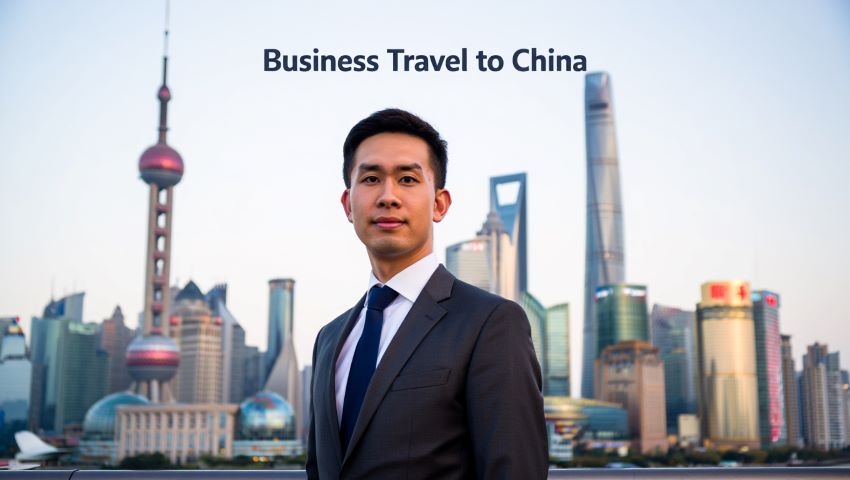
Business travel to China is evolving rapidly as companies expand beyond Beijing and Shanghai into fast-growing cities like Shenzhen, Chengdu, Wuhan, and Hangzhou. These cities are economic powerhouses, attracting global investment and cross-border partnerships. These are modern, ambitious, and opportunity-filled cities. But rapid development does not always imply uninterrupted executive travel. The communication gap, regulatory barriers, digital limits, and infrastructure gaps can frequently become obstacles to productive foreign and domestic leaders.
It is imperative to know these facts. Firms that take business travel to China in an organized corporate travel strategy have an excellent chance of alleviating stress, managing costs, and maximizing outcomes.
A Quick Look at the Bigger Picture
Business travel to China now includes developing regional cities that are fast-growing, but executive travel may be complicated. The barriers to communication, visa policies, and digital limitations pose operational challenges. Any company that applies well-defined travel policies, built-in booking systems, risk management, and flexible booking schedules is well-positioned to manage corporate travel effectively.
The Chinese Cities That Are Growing Faster Than Ever
The economic growth of China is no longer less centralized in just two or three cities. There are a number of cities that are currently at the innovative frontline, including manufacturing, logistics, and fintech.
The following cities are some of the most rapidly developing ones:
- Shenzhen – It is a world-class technological and hardware research and development center.
- Chengdu – An emerging business and logistics center in Western China.
- Wuhan – A transportation and industrial powerhouse.
- Hangzhou – A technology, commerce, and finance powerhouse.
- Xi’an – Expanding in aerospace and advanced manufacturing.
- Suzhou and Nanjing – R&D and export-powered economies.
These cities have good infrastructure, growing airports, and high-speed railway connections. Nonetheless, business travel to China in such areas usually requires more preparation than travel to traditional Tier-one destinations. The local systems, language support, and executive services might vary considerably.
For first-time travelers, reviewing these tips for first-time travelers to China can prevent avoidable disruptions.
The Real Pressure Points Executives Feel in Fast-Growing Cities
1. Communication Gaps That Slow Things Down
Communication is one of the most significant operational issues despite modernization. The report of HROne (2024) indicates that over 60 percent of global enterprises that conduct activities in China encounter severe challenges in communication. This is way beyond placing orders or a taxi ride.
Actually, 45 percent of the organizations indicate project delays that are directly attributed to language misunderstandings. These delays affect negotiations, supplier discussions, and compliance documents. In rapidly developing cities, English proficiency may be less consistent compared to global hubs.
Executives may encounter:
- Misinterpretation of the technical details.
- Delays in government documents.
- Negotiations based on cultural differences.
- Limited signs in English in the local facilities.
Clear bilingual studies and expert translation support help minimize these threats.
2. Visa and Regulatory Pressure That Cannot Be Ignored
Business travel to China requires well-coordinated visa arrangements. The documentation standards are elaborate, and the timelines have to be practical.
A survey conducted by China Trading Desk in 2025, in Q3, showed that 14.3% of business travellers reported visa complexities as a significant irritation. The invitation letters, supporting documents, and appropriate visa categories are essential.
Companies should:
- Begin visa processing early
- Triple-check documentation specifications.
- Schedule a meeting time with approved timelines.
An overview of China business visas can help reduce administrative uncertainty.
3. Infrastructure Gaps That Catch Teams Off Guard
The cities with tier 1 infrastructure in China are at world-standard levels, yet the level of executive leadership in emerging markets can vary. A similar survey that was conducted at the China Trading Desk revealed that 12.5 percent of business travelers had difficulties with the limited hotel coverage under corporate agreement when they travelled outside major hubs.
Common issues include:
- The number of international branded hotels is low.
- Restricted premium lounge access.
- Less availability of executive chauffeur.
- Fewer direct international flights.
There is also the issue of airport congestion at major hubs, which affects productivity.
Support services such as Beijing Capital Airport concierge or Meet and Greet at Shanghai Pudong Airport can reduce waiting time and streamline immigration procedures.
4. Digital Restrictions That Disrupt Daily Work
China is operating in a very controlled online space. Numerous international applications, including Gmail and WhatsApp, are banned through national internet laws.
Executives may face:
- Inadequate access to common email systems.
- Other messaging applications.
- Various mobile payment terminals.
- Connection problems, particularly in some areas.
It is important to plan in terms of hyper-local connectivity. A local SIM card should be provided to executives, and their knowledge of available communication tools should be ensured. The use of VPN is not legal and should be done cautiously and according to local legislation.
5. Cultural Expectations That Shape Business Outcomes
The Chinese business culture emphasizes long-term relationship building, hierarchy, and trust. The swiftly growing cities might have a little discrepancy with the regional standards compared to Beijing or Shanghai.
Executives must understand:
- Formal greeting protocols
- Decision-making hierarchies
- The styles of indirect communication.
- Business dining etiquette
Being prepared helps in being credible and enhances the results of the negotiation.
Corporate Travel Management in Rapidly Growing Cities
Business travel to China does not just need flight bookings. Corporate travel management needs to work on structure, technology, risk reduction, and traveler experience.
1. Creating Travel Policies That Actually Work in Real Life
An effective corporate traveling policy gives transparency and uniformity. It should outline:
- Approved booking channels
- Preferred suppliers
- Spending limits
- Approved workflows
The policies should be clear to avoid confusion and unnecessary expenditure. They also reinforce the coordination of finance and other operations teams.
The U.S. Small Business Administration explained that operational efficiency is highly enhanced by structured planning and cost-management tools. The same applies to travel programs.
2. Using Smart Booking Technology to Stay in Control
The current business travel depends on centralized booking services. The Global Distribution Systems are some of the tools that make finding a reservation easier and make sure that the policies are followed.
According to the International Air Transport Association, the GDS systems continue to be the hub of professional flight booking arrangements.
Integrated systems offer:
- Consolidated reporting
- Automatic policy checks
- Top-down approval systems
- Hotel registration support for foreign travelers
Technology minimizes errors in manual work and enhances cost visibility.
3. Preparing Connectivity Before the Trip Even Begins
Connectivity has to be addressed prior to departure. Companies should:
- Arrange local SIM cards
- Give instructions on alternative communication mediums.
- Provide electronic contingency plans.
Executives should realize that VPN services are limited by the laws and should be utilized with caution. Preparation prevents digital isolation during critical meetings.
4. Strengthening Duty of Care So No One Feels Unsupported
Duty of care is no longer a choice. Companies must provide:
- 24/7 travel support
- Communication channels in an emergency.
- Instant updates on what is happening locally.
- Clear escalation protocols
Localized disasters or policy changes may occur without notice. Constant surveillance secures employees and business continuity.
5. Choosing High Speed Rail for Smarter City-to-City Travel
The high-speed rail system in China is usually faster than domestic flights. The trains are the fastest way of linking city centers, thus avoiding lengthy trips to the airport.
Advantages include:
- Reduced waiting times
- Comfortable onboard workspace
- High punctuality rates
- Lower environmental impact
Business travel to china in most instances, will be efficient in terms of rail transportation between the regional cities.
6. Blending Business and Leisure Without Losing Focus
Priorities for traveling are changing. The report by the ITB China Travel Trends 2025/26 has indicated that 83% of respondents in the industry believe that there is great potential in the bleisure segment. There are numerous professionals who do business and extend short leisure.
Corporate policies may permit:
- Flexible return dates
- Clear cost-sharing rules
- Personal extensions that are controlled.
Executives visiting coastal regions may explore destinations highlighted in this guide to China’s islands.
Flexibility will maximize satisfaction without undermining the business’s objectives.
7. Enhancing the Airport Experience to Protect Productivity
Airport efficiency affects the executive’s productivity. The waiting lines and unfamiliar layouts cause anxiety prior to the commencement of a meeting.
Airport concierge coordination, such as services provided by airssist, can assist with meet and greet support, fast track immigration, and lounge access. For example, Shanghai Airport concierge or Fast Track at Wuhan Tianhe Airport services help streamline busy travel schedules.
Such support helps to increase comfort and enables the executives to be strategically oriented.
Growing With Confidence While Staying in Control
Business travel to China presents tremendous potential in fast-growing cities, which are defining the world economy. Nevertheless, communication, visa procedures, and infrastructure differences, digital limitations, and changing executive expectations are factors that need to be planned.
Flexible scheduling, risk management systems, connectivity preparation, and companies that have definite travel policies, use integrated technology, and have systems of risk management offer quantifiable benefits. Organizations can turn the complexity of traveling into strategic growth with proactive corporate travel management and optimization of the airport experiences.
Planning Business Travel to China? Book services now for smoother executive travel in every city.
Frequently Asked Questions About Business Travel to China
What are the main challenges in Business Travel to China?
The main challenges include communication barriers, visa documentation complexities, and digital restrictions. Infrastructure standards may vary in rapidly developing cities. Cultural differences also influence business interactions. Preparation significantly reduces these obstacles.
How can companies improve connectivity during trips to China?
Companies should arrange local SIM cards and prepare travelers for alternative communication platforms. Digital readiness training is essential before departure. VPN usage must comply with local regulations. Clear guidance prevents disruptions.
Why is integrated booking technology important?
Integrated platforms centralize reservations and enforce travel policies automatically. They improve cost visibility and simplify reporting. Technology also helps manage hotel registration requirements. This increases efficiency and compliance.
Is high-speed rail a better option than domestic flights?
In many cases, yes. High-speed rail connects city centers directly and reduces waiting times. It offers comfortable seating and reliable schedules. Many corporate travel managers prefer rail for regional travel.
How important is the duty of care in corporate travel?
Duty of care ensures employee safety through monitoring and 24/7 support. Companies must prepare for emergencies or policy changes. Clear response systems protect travelers. Strong risk management builds confidence.
Sources
- HROne: Language Barrier In China: Solutions For Success https://hrone.com/blog/language-barrier-in-china-powerful-solutions-for-success/
- China Trading Desk: China’s Business Travel In 2025 Q3: A Strategic Shift Towards Regional Integration https://www.chinatradingdesk.com/post/china-s-business-travel-in-2025-q3-a-strategic-shift-towards-regional-integration
- ITB China: New ITB China Travel Trends Report 2025/26 Reveals What Drives China’s Travel Market https://www.itb.com/en/itb-360%C2%B0/news-insights/new-itb-china-travel-trends-report-2025-26-reveals-what-drives-china%E2%80%99s-travel-market.html
- U.S. Small Business Administration: About SBA https://www.sba.gov/about-sba/organization
Note: Please note that the information on this page is generic & subject to change due to fluctuations in airport services. Kindly confirm service availability with our team, as offerings may vary daily.






 Dubai, United Arab Emirates


