
 Whatsapp
 Buy Gift Card


 Spanish | Espana
 German | Deutch
 Chinese | 中文(简体)
 Japanese | 日本語

Table of Contents
Business leaders today are always on the move. Airports, lounges, and hotel rooms have become second offices. But here is the real question. How does Frequent Travel shape the way leaders think, choose, and decide?
The decision is not only made in the boardrooms. They are prepared on planes, in restrooms, and in between meetings in new cities. Travel is sometimes a sharpening process. At other times, it silently pulls away attention and sanity. You are already familiar with how this feels when you have ever accepted a deal at a greater rate than usual in jet-lag conditions.
This article discusses the impact of travel on real leadership scenarios in terms of decision-making. We will also discuss what intelligent leaders can do to keep their heads straight on the road.
Quick Summary
Frequent Travel will transform the way leaders think, respond, and make decisions. It has the potential to enhance worldview and flexibility, yet it can also cause fatigue, stress, and hasty decisions. Leaders can save their judgment and be more effective by knowing these effects and employing superior planning and recovery, and support tools.
Let’s Look at the Numbers
Before we delve into the behavior of leaders, we need to base this on facts.
The United States Department of Transportation estimates that in the United States alone, business travelers take more than 405 million annually. Leaders do not travel once in a while. It is a way of working.
One study discovered that sleep deprivation has a direct influence on mental capacity, with results showing a decline in cognitive performance up to 40 percent due to cognitive impairment, including memory, risk-taking, and emotional regulation. This is a day-to-day experience among frequent travelers that is caused by jet lag, long flights, and irregular schedules.
The World Health Organization also reports that work stress, which takes a long lead to burnout, anxiety, and low productivity. When not controlled, travel adds to this mental burden.
Yes, frequent travel brings an opportunity. But it also has some latent dangers to information processing and decision-making by the leaders.
Frequent Travel and Its Impact on Executive Decision-Making
Let’s break this down step by step. Each point reflects what leaders actually experience on the road, with simple actions they can take.
1. “I Am Seeing More of the World, But Am I Really Seeing Clearly?”
Travel opens up new cultures, markets, and thinking for the leaders. That is powerful. It creates strategic sensitivity and compassion. The long-term decisions of leaders who visit operations are usually better, as they are in a better position to understand both people and the environment.
But there is a catch. The brain can be overloaded with constant movement. Every day, new time zones, new people, new information. With everything being new, the mind is selective. Leaders might be concerned with things that seem pressing but are not the important ones.
There is also a powerful upside. World connectivity opens the mind. Travelling leaders usually enhance their cultural intelligence. They have a better knowledge of customer behavior and are more aware of negotiations. Leaders who have international experience stand a higher chance of leading competition within the international markets.
This is where frequent travel becomes a strategic benefit. Leaders perceive things that others overlook. They are familiar with local ins and outs. They relate global strategy to human reality.
What leaders can do:
- Build decision buffers. Final approvals should not be made when one is tired or on transit.
- Apply written summaries and re-examine important decisions on rest.
- Capture insights. Journal as a leadership traveler. Document the lessons of each market. Share them with teams. Institutional knowledge should be fed by travel, rather than remaining personal.
2. “Why Do I Feel More Impulsive When I Travel?”
Have you ever thought that decisions are faster on the road? Budgets, partnerships, or strategy changes are something that leaders tend to approve between flights. Travel compresses time. Meetings are short. Schedules are tight. The brain goes into survival mode.
This may result in faster yet less considered decisions. Jet lag lowers the level of attention. Stress enhances emotional responses. Leaders can be more instinctive than analytical.
A study conducted by the National Institutes of Health demonstrates that fatigue causes direct inhibition of the prefrontal cortex, the region of the brain that carries out reasoning and judgment.
What leaders can do:
- Create a “travel rule.” No big financial or people judgments under the influence of sleep deprivation.
- Seek a second opinion from trusted advisors.
- Slow decision-making safeguards the long-term results.
3. “Am I Becoming More Adaptable Or Just More Reactive?”
Leaders become flexible. They are trained to address issues in unfamiliar environments. They become content with the unknown. One of the leadership skills is this flexibility.
Nevertheless, flexibility might become responsiveness. Under such circumstances, leaders who keep changing the context might stop planning and begin reacting to what is immediately before them. This results in short-term thinking.
Travel separates leaders from their support systems. No regular team. No routine. No familiar environment. This loneliness can result in emotional choice. Small setbacks feel larger. Pressure feels heavier. This is what psychologists call decision fatigue. The more choices we make in a day, the worse our judgment becomes. Travel doubles daily choices, including logistical choices, meeting choices, and even cultural choices.
What leaders can do:
- Anchor every trip to strategic goals. Ask one question after each major meeting: Does this move us closer to our long-term vision? If not, why am I changing course?
- Reduce decision load. Homogenize traffic patterns. Use digital scheduling, documentation, and approvals. Give yourself uninterrupted mental room to make high-impact leadership decisions.
4. “Is My Risk Assessment Changing Without Me Noticing?”
Road leaders are usually exposed to new markets. New regulations. New partners. New cultural expectations. This has the ability to skew risk perception. There are those leaders who are too cautious. Others become too bold.
This is particularly necessary where compliance, security, or legal frameworks are concerned in other regions. Travel may expose one to invisible dangers.
To explore further, the following article about travel risk management describes how unstructured travelling can influence business continuity and accountability of leaders:
What leaders can do:
- Prepare before every journey.
- Appreciate operational, political, and legal risk.
- Apply structured risk schemes. When a leader is calm and informed, strategic decisions are more likely to be made.
5. “How Do Travel Costs Quietly Shape Business Decisions?”
Another undetected factor is financial pressure. Flight, lodging, and wasted productivity sum up. Leaders make some hasty deals and accept partnerships to cover the costs of trips. It is a misleading judgment based on this emotional accounting.
To further deconstruct it, the article on the invisible price of business travel highlights how indirect costs affect strategic thinking.
What leaders can do:
- Evaluate travel ROI.
- Ask: Is it really the physical presence that will be of value? Alternatives should be virtual.
- When travelling is required, ensure maximum strategic value is achieved.
6. “Can Travel Environments Actually Improve My Thinking?”
Yes, when done right. Cognitive overload is lowered in quiet spaces. Reflection is facilitated by comfortable environments. According to many leaders, they get the best ideas when they are on a flight or in a peaceful lounge.
Stress can be decreased by access to organized spaces like professional lounges, enhancing concentration and enabling leaders to prepare or reflect freely. That is why such tools as business lounge access are more often considered as productivity tools, rather than other luxuries.
What leaders can do:
- Design recovery into travel.
- Select conditions conducive to thinking. Protect downtime. Rest is not laziness. It is strategic clarity.
7. “How Do Role Models and Elite Travelers Manage It Better?”
Global executives and entrepreneurs usually move all over the world, but they do not lose their wit. Why? They systemize travel because of them. They delegate logistics. They are only interested in making decisions that they can be of leadership value.
The profile of these business tycoons demonstrates that elite leaders organize mobility without compromising strategic thinking.
What leaders can do:
- Stop doing everything. Automate what can be automated.
- Delegate the delegable. Leadership does not mean surrounding oneself everywhere. It is about choosing what is important.
8. “Is Sustainable Travel Part of Better Leadership?”
Yes. Environmental and social impact is also the responsibility of leaders now. There is a carbon footprint to the constant flying. Traveling options are now put under ethical leadership.
This sustainable business travel guide demonstrates how organizations match travel practices with responsible leadership.
What leaders can do:
- Where feasible, use sustainable choices.
- Combine trips.
- Reduce unnecessary travel. It is not solely about leadership outcomes. It is also about responsibility.
9. “Where Does Support Technology Fit In?”
Strategic leaders no longer go solo. They use systematic support to minimize friction. There are management tools that handle logistics and airport operations, freeing time to focus on real leadership.
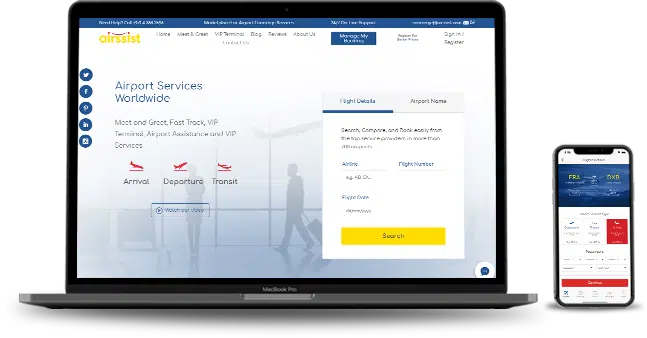
The services, such as the airssist are aimed to help make complex travel touchpoints easier. It is not the way of selling luxury, but eliminating the stress of movement. The less distracted leaders are by the process, the more informed their decisions are.
This is not about comfort. It is about cognitive space.
10. “Does Destination Choice Shape Leadership Thinking?”
Absolutely. Markets influence mindset. An executive who negotiates in the emerging economies can emphasize agility. A manager in a developed financial center can focus on the rules and long-term organization.
Understanding the context is important. This list of top business travel destinations explains how geography affects business activities.
What leaders can do:
- Study destination psychology.
- Change leadership strategy depending on the market maturity, culture, and risk profile.
So, What Type of Leader Would You Like to Be on the Road?
Frequent travel not only deals with the destinations of leaders. It is concerning the way they reason when they are there. Travel has the potential to broaden outlook, refine flexibility, and enhance world knowledge. Nevertheless, it can also silently impair judgment when fatigue, stress, and speed are not checked.
The most effective leaders do not have to travel more. They travel smarter. They safeguard their space of minds. They construct systems that favor transparency. They prefer those settings in which they are allowed to reflect. And they make decision-making a science, and not a response.
In case you need some practical advice on enhancing your travel management without losing performance, this guide will provide actionable tips on how to improve your leadership by being on the move.
Leadership is not about distance; it is, in the end, about connection.
It focuses on the clarity of decisions made upon arrival.
FAQs: How Frequent Travel Impacts Decision-Making
What is the travel decision-making process?
The travel decision-making process involves planning, risk assessment, decision-making, and implementation before, during, and after travel. For leaders, this entails business priorities, timing, cost, safety, and strategic outcomes. Organized decision-making minimizes emotional bias and enhances decision-making under pressure.
How does travel impact people?
Travel affects sleep, stress, emotional balance, and cognitive performance. Excessive hours, time zone differences, and constant decision-making can leave one exhausted and less attentive. In the long run, this may affect the judgment, communication, and effectiveness of leadership.
How does global travel contribute to effective leadership?
International travel develops cultural tolerance, flexibility, and vision. Leaders are able to obtain first-hand experience of markets, customers, and the realities of operations. This exposure empowers decision-making because the strategy is anchored on reality rather than assumptions.
How can using the decision-making process make you a better leader?
The systematic decision-making process helps leaders separate emotion from analysis. It promotes contemplation, risk assessment, and goal attainment. In the long run, this science will result in more stable, transparent, and accountable leadership.
Can Frequent Travel lead to burnout in leaders?
Yes, if unmanaged. Unceasing motion raises stress, exhaustion, and mental tension. A lack of recovery time and organised support can lead to leaders losing concentration, becoming irritable, and experiencing declining decision quality. Sustainable leadership requires balanced travel behaviours.
How can leaders protect decision quality while traveling?
By ensuring that they rest, standardizing their routines, and not making high-stakes decisions when fatigued, leaders can help preserve the quality of their decisions. Delegating logistics, planning with the aid of planning tools, and creating time for reflection in travel schedules also help maintain clarity.
Sources
- U.S. Bureau of Transportation Statistics: America on the Go – Business Travel Analysis
- National Library of Medicine: The Cognitive Impact of Jet Lag and Frequent Transit
- World Health Organization (WHO): Mental Health and Well-being in the Professional Workplace
- PubMed Central: Long-term Effects of Frequent Travel on Executive Performance
Note: Please note that the information on this page is generic & subject to change due to fluctuations in airport services. Kindly confirm service availability with our team, as offerings may vary daily.






 Dubai, United Arab Emirates


