
 Whatsapp
 Buy Gift Card


 Spanish | Espana
 German | Deutch

 Chinese | 中文(简体)
 Japanese | 日本語



How can sports teams and athletes use airport concierge services?
Sports teams and athletes use airport concierge to move large groups, bulky equipment and tight schedules through airports smoothly, with agents who guide the squad, porters who handle cases and vehicles planned for both people and gear. The aim is simple: the team arrives rested and on time, and staff are not distracted by logistics.
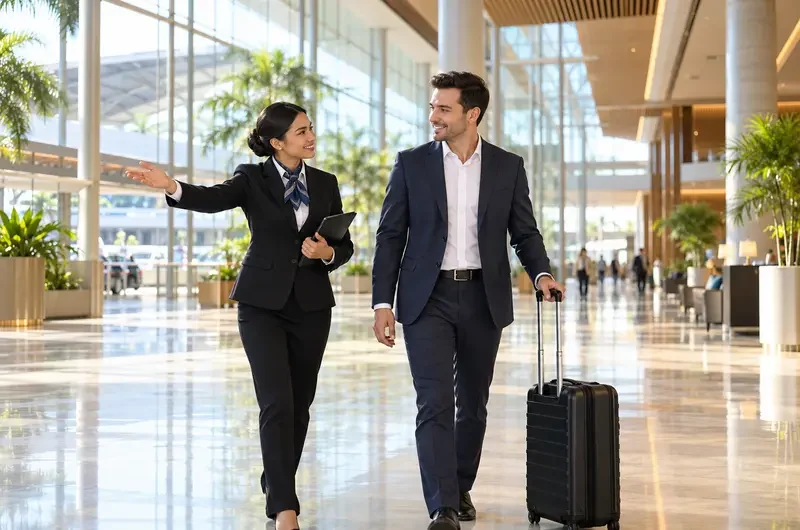
Team travel has special demands. Squads of players and staff travel together, often on charter flights or on scheduled flights in groups. They carry kit bags, medical equipment, analysis gear and, in some sports, large items such as bikes, boards or bats. Match schedules leave little room for delay, and fans or media may gather at arrivals.
A concierge plan covers each stage. Before travel, the team manager shares the squad list, flights, equipment inventory and hotel details. On arrival, agents meet the group at an agreed point, guide players through immigration and baggage, and move equipment to vehicles. On departure, the process runs in reverse. A lead agent coordinates, and a single contact on the team's side keeps information flowing.
Where privacy matters, for example for high-profile athletes, the plan can include quieter routes and discreet vehicles. airssist provides airport services for groups and VIPs at airports worldwide.
Team travel also involves recovery. Players who have had a smooth arrival, with short queues and a comfortable vehicle, start training or competition in better condition. That is why many staff treat ground logistics as part of performance.
How is equipment handled for teams?
Equipment handling is the most delicate part of team travel, because items are heavy, valuable and often time-critical. Good planning protects both.
- Inventory: Make a list of every case, with contents, size and weight, and share it with the airline and the provider.
- Airline approval: Agree the rules for excess and oversized baggage, special items and restricted goods well before travel.
- Packing: Use durable cases, label them clearly and keep critical items, such as medical supplies and match kits, in the cabin where permitted.
- Handling: Agents and porters move the cases through check-in, oversized counters and arrival halls, so that players do not carry heavy loads.
- Customs: Check whether temporary import of equipment needs paperwork in the destination country.
- Vehicles: Choose vans or trucks with enough space, and plan the loading order.
- Security: Equipment may need extra screening, so allow time.
- Insurance: Check that valuable equipment is covered in transit.
A concierge coordinates the people and logistics around these steps, but airline rules and customs requirements remain the team's responsibility. For complex shipments, such as large amounts of equipment or items that need special packing, a specialist freight forwarder may be the best partner, alongside airport services for the people.
Give the provider the details early. The more clearly you describe the cases and the schedule, the better the plan.
Remember that some sports have strict rules about equipment, such as bats, poles, bikes and protective gear. Check them with the airline early, and keep a list of items that must travel in the cabin.
How are arrivals planned for squads and staff?
Plan arrivals as a single operation, with a clear schedule and a single contact.
First, collect a manifest: names, roles, flights, terminals, landing times, special needs and any people who travel separately, such as medical staff or families. Second, group people by arrival time, and plan one or more arrival waves. Third, assign a lead agent to each wave, with a clear meeting point. Fourth, match vehicles to groups and equipment: coaches or minibuses for squads, vans for gear and cars for senior staff.
Prepare for external attention. Fans and media may gather at arrivals, particularly for high-profile teams. Agree in advance whether the team wants a quiet route, a different exit or a planned public welcome. Share the plan only with those who need it.
Plan the first hours as well. Players may need meals, rest or training soon after landing. Share the schedule with the provider, so that vehicles, timing and stops fit it. For departures, allow ample time for check-in, security and equipment, because delays are costly.
On the day, keep a single point of contact on the team's side, and ask the lead agent to send updates as each wave is met. If flights change, update the plan once, and let the provider adjust all the waves.
After the trip, review what worked, and refine the template for the next away fixture.
Can airssist support my team's travel?
Yes. Share your squad size, flights, equipment details and destinations, and our team will help plan agents, vehicles and a ground coordinator. Search the airports on airssist or contact us for larger movements.
Ask about group pricing and discreet arrangements for high-profile athletes. We are available 24/7 in most locations and can adjust plans when flights change.
Email [email protected] or call +971 4 456 1940 to plan your team's travel.
People also ask about "sports team airport travel"
Can airport concierge handle a whole sports team?
Yes, with advance planning. Share the squad list, flights and equipment details.
How is sports equipment handled?
Through airline oversized baggage rules, porters and larger vehicles. Agree details with the airline in advance.
Can athletes get a more private arrival?
Often yes. Discuss privacy needs with the provider in confidence.
How early should a team book airport services?
As soon as flights are known, and earlier for large squads.
Who coordinates on the day?
A lead agent or ground coordinator, with one contact from the team.




 2009, JBC5, Cluster W, Jumeirah Lakes Towers Dubai UAE


