
 Whatsapp
 Buy Gift Card


 Spanish | Espana
 German | Deutch

 Chinese | 中文(简体)
 Japanese | 日本語



How can I avoid missing a connecting flight on a business trip?
You can reduce the risk of missing a connection by planning realistic connection times, understanding the transfer process at the connecting airport and arranging support for tight schedules. No service can overrule airline cut-off times, but good planning and the right assistance remove most avoidable delays.

Most missed connections come from a handful of causes: a short layover on an international itinerary, a late inbound flight, a terminal change, a long security or immigration queue, or confusion about whether bags are checked through. Each can be managed in advance.
Start by choosing a connection time that fits the airport. Large hubs often need more time than small ones, especially if you must clear immigration or switch terminals. Book connecting flights on a single ticket where possible, so the airline is responsible for rebooking you if the first flight is late. Confirm that your baggage is checked through to your final destination.
If your schedule is tight, a transit meet and assist service can help. An agent meets you at your arrival gate, guides you through transfer procedures and uses fast-track lanes where available. airssist offers airport concierge services at airports worldwide, including support for transit passengers.
Remember that the minimum connection times published by airports and airlines are the shortest the system allows, not a comfortable time. If you are traveling for an important meeting, add your own buffer, particularly in winter when delays are more common, or when you are traveling at busy times.
Can airport concierge help with a tight connection?
Yes, in many cases, although it cannot guarantee a connection. A concierge helps by removing the delays you can control.
When you land, your agent meets you at the aircraft door or arrival gate, so you do not need to search for signs or ask for directions. They guide you along the fastest route to the transfer desk, security checkpoint or immigration counter. Where the airport offers fast-track lanes, the agent can help you use them, which can shorten waiting times at the busiest points. At large airports, assistance may include buggy transport between distant gates.
An agent can also help in practical ways: checking the departure gate, helping with boarding passes and making sure you go to the right terminal. If your inbound flight is delayed, the support team can monitor the situation and keep you informed.
Keep expectations realistic. Airlines set check-in and boarding cut-off times, and a concierge cannot change them. The best approach is to combine realistic planning with support: book a longer connection if possible, share your flight details with the provider in advance and keep your phone available for updates. For executives with important meetings at the destination, this combination is often well worth it.
Communication matters as much as speed. Give the provider your arriving and departing flight numbers, terminals and passenger details well before you travel, and make sure you can be contacted on arrival. The more the agent knows, the better prepared they will be to take you straight to the right place.
What else reduces the risk of a missed connection?
Several simple habits make a big difference.
- Choose longer connections for international transfers. If you must clear immigration, change terminals or collect and recheck baggage, allow generous time.
- Book on one ticket. If your flights are on the same booking, the airline is generally responsible for getting you to your destination if the first flight is late.
- Check baggage rules. Confirm whether your bags are checked through to the final destination or must be collected and rechecked.
- Review entry rules in advance. Check passport validity and visa or e-visa requirements for the connecting country, even for a short stay.
- Sit near the front. If the first leg is tight, choose a seat that lets you leave the aircraft quickly.
- Download the airline app. Gate changes and delays appear there first.
- Know the terminal layout. Look at the airport map before you land.
- Keep key documents in one place. Passport, boarding passes and visas should be easy to reach.
If a connection is at risk, speak to the cabin crew or airline staff early. They can sometimes offer solutions. Adding a meet and assist service to your plan gives you extra support on the ground.
Finally, have a plan B. Save the airline's customer service number, know where its transfer desk is and keep a second option in mind, such as the next flight with availability. A calm, prepared traveler recovers from disruption faster, and the support team can help you with onward arrangements.
Can airssist assist my next connection?
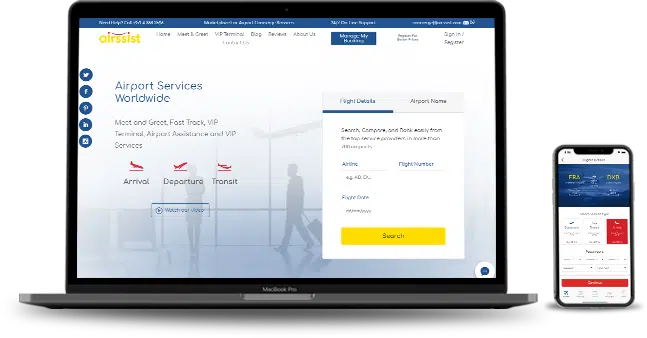
Yes. airssist offers airport concierge services at airports worldwide, including support for transit passengers. Enter your connecting airport on airssist to see what is available, such as meet and assist, fast-track and chauffeur transfers.
For an important trip, share your flight details with us ahead of time. Our team can advise on the best service for your itinerary and keep you informed if plans change. We are available 24/7 in most locations, and bookings can be made at short notice through the mobile app.
Email [email protected] or call +971 4 456 1940 to plan smoother connections for your next business trip.
People also ask about "missed connecting flight"
What happens if I miss a connecting flight?
The airline generally rebooks you, with conditions depending on your ticket. If both flights are on one booking, the airline is usually responsible. Speak to airline staff straight away.
How long should a layover be for international flights?
There is no single answer. Allow more time when you must clear immigration, change terminals or recheck baggage, and at large hubs.
Can airport concierge help with connecting flights?
Yes. An agent can meet you at the arrival gate and guide you through the transfer, although a concierge cannot change airline cut-off times.
Is it safer to book connecting flights on one ticket?
Generally yes, because the airline is usually responsible for rebooking you if the first flight is delayed.
What is the minimum connection time?
It is the shortest time an airport and airline allow between flights. It is a minimum, not a comfortable time, so add your own buffer for important trips.




 2009, JBC5, Cluster W, Jumeirah Lakes Towers Dubai UAE


